His intoxication should be obvious by smell and behavior, though the copilot noticed and Margaret knew his habits. Trina should be anxious after sharing his sleepless drug-fueled night.
Autopilot and Whip’s choice to fly aggressively through weather are discussed with uncertainty about automated takeoffs versus landings.
The adjoining hotel door and stocked minibar should have been secured, and the guard should have heard the destructive night.
The enormous bottle count seems physically implausible even with tolerance; no verified medical threshold is asserted.
Postpone the hearing with a food-poisoning excuse or bring him into supervised sobriety closer to testimony rather than leaving a long interval.
A Navy prequel about Whip and Charlie, a prestige series and a prison sequel are proposed. Shot Caller and a future prison-movie theme are discussed as prospective programming.
Harling Mays is already present and disqualified; Samuel L. Jackson as Whip would be much funnier.
Jackson is also preferred as Harling Mays; Wayne Jenkins is judged redundant. Harling is imagined in past films such as Saving Private Ryan, and Byron Mayo in the opening room.
Another Byron Mayo opening-scene impersonation is offered.
The closing review finds the crash extraordinarily frightening, likes the first and last 25 minutes most, and wants a middle scene with Whip flying Nicole in the small aircraft.
The closing review praises Chris’s afterlife theory for changing his interpretation, especially the congregation in white; the hosts acknowledge someone else may independently have conceived it.
Vinnie is explained as a composite of three Black park players: Vinnie Livermore, Poe McClinton and an older Jerry. This reassures Charles that the character has a real-world basis rather than purely stereotyped invention.
A 12 million budget, 7.3 million gross and cinematography nomination are cited. The crowded 1993 summer is blamed for poor box office despite a durable afterlife.
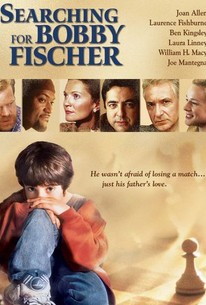
The real rival Jeff Sarwer is said to have been younger, gifted and from a troubled family, with the actual championship shared after a draw. Bruce and other real models reportedly disliked unflattering portrayals, illustrating winner-authored history.
The film’s winning position was invented; an October 1995 Chess Life analysis attributed to Larry Evans reportedly found that the opponent could have won. A participant also questions the king pursuit but is teased for lacking expertise.
Max Pomeranc was reportedly selected partly for actual chess ability. The real Bruce is described as friendly, soft-spoken, mustached and curly-haired, unlike the film’s severe figure.
Real park players informed characters; Waitzkin later left chess for Chinese martial arts, won titles and earned a Brazilian jiu-jitsu black belt, as reported by the hosts.
Displaying discussions 4837 - 4848 of 8676 in total