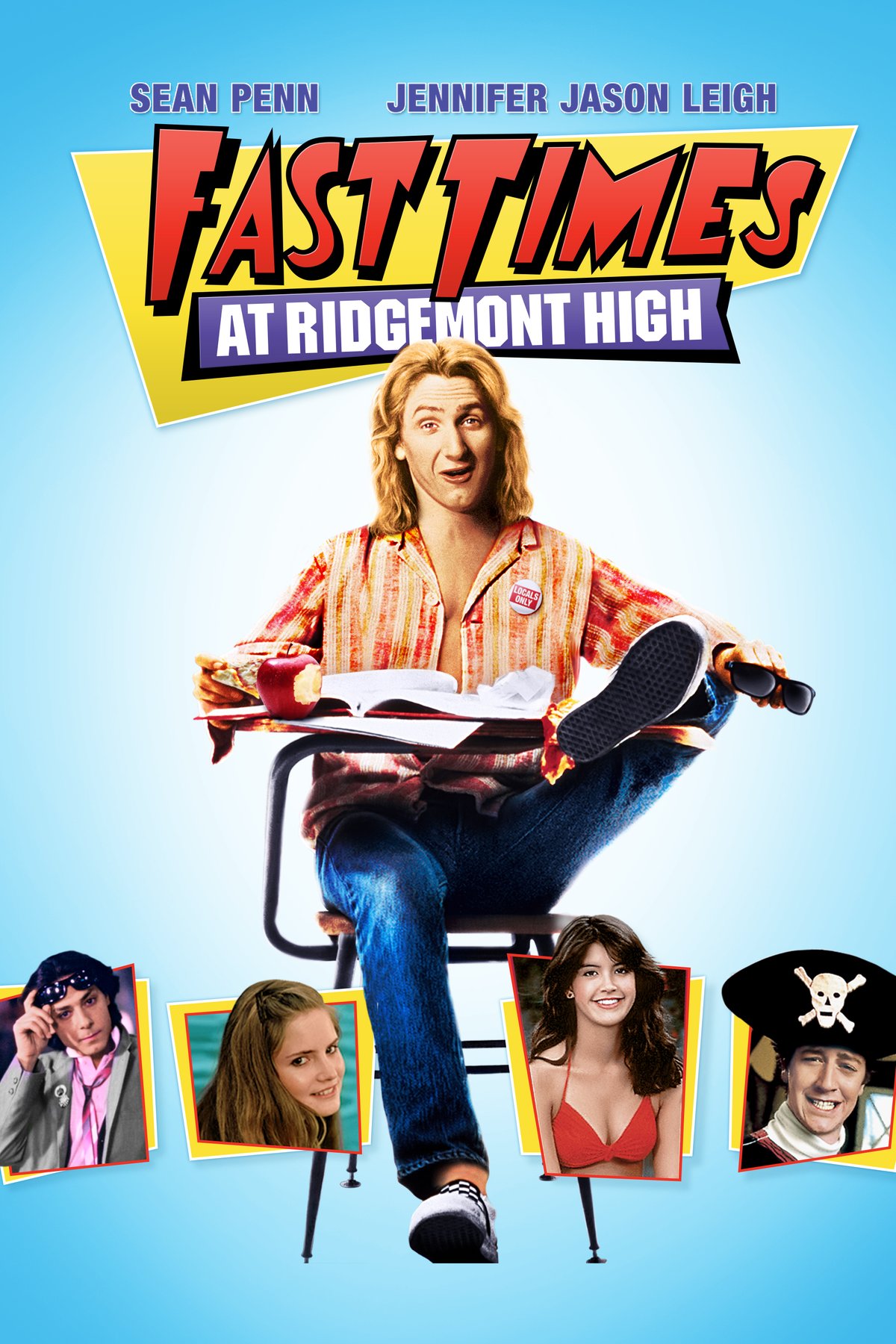
Several initially think Doug is fictional; the invented boyfriend could explain the advice and repel attention. A deleted scene reportedly establishes the older girl as an advice-giver, complicating the theory.
Modern location tracking and sneaking out are debated; parenting views and possible workarounds are speculation, not a finding about all children.
Jefferson’s statistics, college destination and future are imagined. The combination of a14point spread and five-to-one odds is considered inconsistent gambling.
Two era-specific suggestions are Valley Girl and Last American Virgin. Other choices are American Graffiti for influence and Dazed and Confused for the stoner connection.
A Clueless pairing is suggested for the shared director, but receives only qualified agreement because the films feel distinct.
Locking doors and knocking are the main privacy lesson; the student’s rule-making philosophy is reiterated.
Exam-cheating memories are offered as a lesson and qualified as mainly college. The panel contrasts this openness with earlier silence about bookmaking; no conduct advice is endorsed.
The review praises the contrast between the girls’ openness and the boys’ posturing and fantasies. — Craig Horlbeck
Later teen films are considered less informative about relationships, with several examples; this is a personal generational impression. — Craig Horlbeck
The famous performance initially feels like a lot, then becomes warmer on viewing. Prior reputation and disconnected scenes qualify the reaction; the host’s stronger teasing is not the reviewer’s stated verdict.
The robbery ending feels abrupt, though the raw situational comedy is appreciated. A parents-return ending is jokingly suggested.
How many losing bets would conceal use of the almanac? Roughly 70–75 percent success is suggested, while selective large bets might explain Biff's fortune.
A 1950s bettor has few legal venues, and repeated wins could attract murderous mob attention despite weaker surveillance than modern sportsbooks.
Marty could memorize one or a few profitable results before burning the almanac.
Why does time travel cause no jet lag or prolonged exhaustion? Marty's chicken trigger and almanac handling are recalled as already covered.
Doc's lack of age-peer friends and constant companionship with a teenager seem suspicious through a modern lens. A sexuality question is answered by his Part III romance with Clara.
Fifty years of results seem impossible to fit into the thin almanac; a larger book would not work as a pocket-sized plot object.
Fox and Elisabeth Shue look too old for teenage roles; advancing Marty to college or young adulthood would help.
Biff's precise memory of receiving the almanac and Marty's childhood knowledge of the manure crash seem implausible.
Marty's casual rooftop drop onto the hovering DeLorean requires extraordinary nerve and coordination.
Doc risks a close encounter with his earlier self despite his strict warnings about others meeting themselves.
Marty's newly central chicken sensitivity feels invented; loser or a short joke would be a more credible trigger.
Doc condemns knowing one's destiny despite surviving because he read Marty's letter and wore a bulletproof vest.
A local robbery should not lead USA Today's front page, even if its real-time updating is appealing.
Marty could identify himself by fingerprints as Jennifer's husband and retrieve her rather than breaking into the house.
Western Union preserving and delivering the letter after seventy years is implausibly reliable.
Biff's growing power should change sporting outcomes and invalidate the almanac, perhaps after his first win.
Biff's national celebrity sits oddly with building his casino only in his hometown.
The second manure humiliation might make young Biff violently retaliate rather than leave a repaired timeline.
Old Biff returns to the same future after changing the past, conflicting with alternate-timeline rules; the fact that young Biff has not yet bet is offered as a possible defense.
The World Series is implausibly finished by October 20.
Doc and Marty could address present problems directly, or use their extraordinary invention to prevent major historical tragedies rather than fix their own family.
Jennifer is unnecessarily brought along, sedated and abandoned; an early exit from the malfunctioning car could remove her more cleanly.
Doc leaves the time-machine keys in the car.
Leaving Einstein in suspended animation seems cruel and wastes a potential canine contribution; returning him home would be simple.
The Libyans from the first movie disappear from the story.
Biff foolishly exposes the almanac in his winning-race photograph.
Biff's casino residence is too dark and ordinary for his enormous wealth.
Why would Griff need clumsy Marty Jr. for the robbery? Using him as the fall guy resolves the objection.
Marty absorbs punishing blows from Biff while hanging beside the car without being incapacitated.
For movie objects to steal, the Holy Grail offers healing but its boundary rule limits eternal life; Moneyball's algorithm is nominated to prevent advanced statistics from taking over baseball.
They Live glasses, Raiders artifacts and the mysterious Pulp Fiction briefcase are considered. The DeLorean outranks the almanac for one host; the hoverboard is another option, with maintenance and safety objections.
The Limitless pill is one host's number one because enhanced intelligence could also win bets, despite the need to manufacture more and dependency risks.
The When Harry Met Sally orgasm-scene salad is a wild-card joke choice; no shared final five or settled ranking emerges.
ILM's compositing let Michael J. Fox appear as three characters within a scene more easily than older techniques.
A $40 million budget and $332 million gross are cited, ranking third for 1989.
Glover's lawsuit led to likeness provisions in the Screen Actors Guild agreement.
The Cafe 80s Wild Gunman game was made for the film; the Oh LàLà cover used a 1955 Swank photograph of Venetia Stevenson.
Lea Thompson kept the breast prosthetic; the rejuvenation-clinic explanation spared Lloyd heavier old-age makeup.
The film is described as MCA Universal Home Video's first videocassette release, followed by recollection of expensive early tapes.
Antique-store objects include Jaws 2 and Animal House tapes, Roger Rabbit, Perrier, a Bee Gees album, Pac-Man lunchbox, Carter peanut bank, radio and video-game packaging.
Displaying discussions 4213 - 4224 of 7108 in total