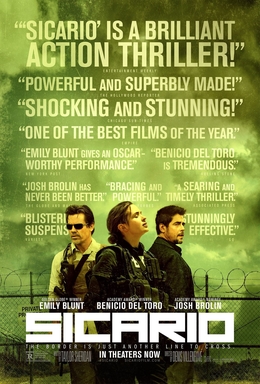
Early life lessons concern degrees of wrong, personal revenge defeating business logic and the failure of an expected hero. Kate’s final understanding is qualified as acceptance.
The life-lesson choice is Alejandro’s warning that doubt will eventually become understanding.
Double-feature choices are Sicario: Day of the Soldado, King of New York, Fast Five and Happy Gilmore. Fast Five is placed first; adding Furious 6 is proposed then rejected.
Craig corrects his earlier claim of seeing Sicario theatrically: he first watched on a laptop and was underwhelmed, then loved the full television-and-sound rewatch. Aerial shots and the plane shadow are praised.
Scene candidates include the divorce/car exit and Jacob meeting Hannah. Lady Bird is compared to the car exit; Jacob’s confidence under rejection divides interpretation.
The friends choosing sides in divorce and John Carroll Lynch’s breakup scene are praised as an underexplored social dynamic.
The male makeover montage is praised for humor, effective styling and Cal’s renewed self-respect; other makeover films are compared and the already-attractive-woman trope criticized. Carell changing weight is explicitly speculation.
Scene candidates include pickup training, Robbie raising Bacon’s chair, Tomei’s bar encounter and the teacher reveal. Tomei receives a playful long-term-crush honor.
Hannah returning to Jacob’s house is praised for the Dirty Dancing lift, humor, surprising vulnerability and a believable connection built in minutes; whether they have sex remains inferred rather than shown.
The actors’ chemistry prompts discussion of on-set relationships and spouses, including Mr. & Mrs. Smith as a comparison; speculation is not film fact.
The converging backyard fight and Bacon’s arrival are praised. The graduation speech is rejected by one host as too sweet, with other school-ending films discussed.
The romantic Dirty Dancing sequence wins the scene majority, with a dissenting preference for the backyard fight.
A late scene candidate is Cal’s nighttime phone call while looking through the window; Talking Heads during lawn watering is an additional needle-drop choice, with no song title stated here.
The pickup-artist character is treated as a period marker. Mina argues his approach is less harsh than The Game, while others point to explicit negging; the disagreement remains.
Most-2011 choices include the cast’s career moment and Jacob’s metrosexual styling; the reversal of fashion makes Cal’s original loose clothing more current.
Driving the teenage babysitter home is proposed as a 2011 marker, with rideshare as the current alternative; a personal callback follows.
Further 2011 markers are Twilight alone, the Moore/Kutcher text, an older phone, answering machines and the babysitter-photo plot.
Jacob’s account of his parents explains his behavior and why Cal reminds him of someone, praised as an effective interlocking script rather than forced exposition.
Choosing sides after a couple’s divorce ages well and prompts a proposed game-show idea.
Westfield Century City Mall is strongly praised as aged best, alongside the film’s Valley/Los Angeles setting; the attraction ranking is not a complete top-ten list.
Jonah Bobo’s performance, Bacon’s romantic-antagonist skill, the Scarlet Letter complaint and the pole-dancing line are aged-best choices.
The use of cuckold and bang and the small jokes age well, while saying nobody uses cuckold anymore ages poorly.