
‹ All movies
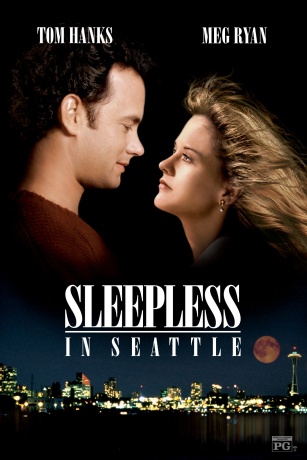
Sleepless in Seattle poster

Sleepless in Seattle

100 minutes

Cast

Selected cast credits · Film reference

Tom Hanks Sam Baldwin
Meg Ryan Annie Reed
Bill Pullman Walter
Ross Malinger Jonah Baldwin
Gaby Hoffmann Jessica
Barbara Garrick Victoria
Carey Lowell Maggie Baldwin
David Hyde Pierce Dennis Reed
Dana Ivey Claire
le Clanché du Rand Barbara Reed
Kevin O’Morrison Cliff Reed
Valerie Wright Betsy Reed
Frances Conroy Irene Reed
Tom Tammi Harold Reed
Calvin Trillin Uncle Milton
Caroline Aaron Dr. Marcia Fieldstone
Linda Wallem Loretta
Tom McGowan Keith
Marguerite Schertle Baltimore waitress
Matt Smith Mailman
Amanda Maher Clarise
Victor Morris Seattle maitre d'
Philip Mihalski Seattle waiter
Donald J. Lee Jr. Seattle detective
Mary A. Kelly Nervous woman on airplane
Diane Sokolow Tiffany saleswoman
Hannah Cox Jessica's mother
Rich Hawkins Jessica's father
Tamera Plank Stewardess
Mike Badalucco New York taxi dispatcher
Jeff Mazzola New York taxi dispatcher
Philip Levy Taxi driver
Julie Janney Cynthia
Tony Zazula Maitre d'
John Boylan Elevator man
Robert Livingston Elevator man
Sidney Armus Information booth man

Sleepless in Seattle | The Rewatchables

Explore episodeClose episode

Producer credits not yet identified.

The Stephen A. Smith Hottest Take Award

Hanks/Ryan are the romantic-comedy greats; O’Donnell’s best work; remarriage is rushed

In the discussion (3)
Approx. transcript time · 00:09:35Read transcript
  • The announced hot take credits the pairing of the male and female romantic-comedy greats, Hanks and Ryan; its supposed novelty is challenged, with Roberts and Clooney alternatives raised.
  • The hot take calls this O'Donnell's finest work and praises her ideal grizzled friend, while others defend her talk show, Beautiful Girls and A League of Their Own; comparisons distinguish Fisher's fuller character arc in When Harry Met Sally.
  • A second hot take says a year and a half is too soon to seek a new spouse and introducing Victoria after one date is irresponsible; competing views emphasize a happy widowhood leading to new love, the child's initiative and personal reluctance to remarry.

Most Rewatchable Scene

Radio-call and driving sequence

In the discussion (9)
Approx. transcript time · 00:27:14Read transcript
  • The attic wedding-dress conversation is a scene candidate for its destiny, coincidence and matching-sandwich writing; the dress itself is disliked while Annie's slip and velvet dress are discussed.
  • The economical opening establishes the wife's death without prolonged exposition; throwing down business cards makes Sam's angry grief believable, though it is not presented as a favorite rewatchable scene.
  • Jonah's radio call and Sam remembering his wife making everything beautiful are scene candidates that provoke tears; the child's I live here response is a favorite beat.
  • The tiramisu misunderstanding with Reiner is a nominated scene; the seafood counter and clams or oysters look appealing.
  • Annie composing her letter while Becky watches television is a scene candidate, especially the Walter reaction and destiny-can-be-doom line; Becky's unseen Rick is compared with Cheers' unseen Vera.
  • Jonah fearing he is forgetting his mother is an unexpectedly devastating scene for parents, with Bye Bye Blackbird intensifying the emotion.
  • Sam spotting Annie at the airport is nominated; his struck-by-love reaction is compared with Michael Corleone seeing Apollonia.
  • Wilson describing An Affair to Remember and the men's Dirty Dozen response is a scene candidate; Wilson reportedly auditioned for the lead and improvised this unusual exception to Ephron's precise scripting.
  • The ending from Walter's dinner through the final meeting is a major alternative, but the final scene preference is the radio-call/driving sequence, combining Hanks's emotion and Ryan's physical comedy; agreement follows.

What’s Aged the Best?

Separated leads; Reiner; Becky; potatoes; Seattle houseboat; voice intimacy; first-date drinks; film references

In the discussion (14)
Approx. transcript time · 00:38:21Read transcript
  • Keeping the romantic leads apart until the end is an aged-best structural choice.
  • Reiner's dopey, sarcastic supporting presence makes a strong impact in only two scenes.
  • Becky's repeated silent reactions to Walter are an aged-best comic detail.
  • Jonah's backhanded thanks for unusually cooked potatoes is praised as a perfectly childish insult.
  • A YouTube horror recut treating Annie as a murderous stalker is enthusiastically recommended.
  • Victoria's excessive laugh is admired as a comic conception, although the performance and character provoke disagreement.
  • The number-one soundtrack is praised, naming Jimmy Durante, Louis Armstrong, Nat King Cole, Carly Simon, Gene Autry, Joe Cocker, Harry Connick Jr., Tammy Wynette and Celine Dion.
  • Ryan's dresses and trench coat preserve a very 1993 look that can count as both best and worst; Annie Hall influence and a speculative AIDS-era aversion to revealing clothing are discussed.
  • Seattle's water, Pike Place and houseboat are aged-best choices; the airy light wood, round stair window and bathroom are especially admired, while the houseboat's mobility is questioned.
  • Annie's investigation anticipates modern internet stalking; her extensive results with limited 1993 resources are admired while hiring a private investigator goes too far.
  • Radio intimacy and parasocial attachment have aged well as evidence that people talking remains compelling content.
  • Drinks rather than dinner remains an effective first-date strategy because it allows a quick exit.
  • Movie references to Fatal Attraction, Pride of the Yankees and An Affair to Remember remain legible rather than dating the comedy.
  • Annie briefing Walter on sensitive family topics, including financial losses and the IRS, remains a convincing social detail.

The Great Shot Gordo Award for Most Cinematic Shot

Funeral wide shot; phone bench; New York pullback

In the discussion (3)
Approx. transcript time · 00:49:34Read transcript
  • The opening wide funeral shot against Chicago is a cinematic-shot choice.
  • Jonah and Sam framed on the bench holding phones is another cinematic-shot choice.
  • The helicopter pullback revealing Jonah and New York is another cinematic-shot choice; a subsequent filmmaker comparison is unclear in the transcript.

The Butch’s Girlfriend Award for the Weakest Link in the Film

Walter’s breakup response; Jessica’s parents; Clarise (disputed)

In the discussion (3)
Approx. transcript time · 00:50:08Read transcript
  • Walter's implausibly calm response to the broken engagement is a weak-link choice; his six-weeks-absent remark and grandmother's china obsession deepen the complaint, while affection for Pullman is defended.
  • Jessica's parents, especially her father announcing This is your father, are a weak-link choice because their broad tone seems to belong in Seinfeld.
  • Clarise is a disputed weak-link choice for useless babysitting when Jonah disappears; a counterview sees deliberately terrible babysitting as the joke and proposes her as a heat check.

What’s Aged the Worst?

Flight graphics; butt discussion; child’s solo trip; dated technology; matching perms

In the discussion (7)
Approx. transcript time · 00:53:11Read transcript
  • The flight graphics, swirling Empire State transition and crude map are aged-worst choices that invite replacement with modern graphics.
  • Reiner evaluating Sam's butt is criticized as implausible male behavior; the objection to men crying over The Dirty Dozen is withdrawn after others explain they are mocking Wilson.
  • Eight-year-olds buying flights and Jonah independently handling airports, taxis and the Empire State Building are challenged as implausible; Jessica's travel-agent parents and access to equipment partly explain ticketing, but no adult noticing the unaccompanied child remains a problem.
  • Open access to airport gates is identified as a changed pre-9/11 practice, remembered fondly rather than condemned.
  • A nationally shared live radio call-in seems dated and prompts questions about syndication timing; Loveline supplies a possible analogue.
  • Annie's stalking, corded landlines, green-text computers and piles of postal mail date the film against smartphones, email and direct messages.
  • The mistaken-identity plot relying on matching short permed curls feels distinctly early-nineties.
In the discussion (6)
Approx. transcript time · 01:16:47Read transcript
  • O'Donnell is rejected as a heat-check candidate because she is effectively the third lead and essential to the plot.
  • Carey Lowell’s ghostwife is a heat-check alternative.
  • Gaby Hoffmann and the Empire State Building security guard are additional heat-check candidates.
  • Clarise receives one explicit choice for her unchanging, ineffectual babysitter expression.
  • Caroline Aaron as Dr. Marcia Fieldstone receives a heat-check choice.
  • Rita Wilson receives another choice for her monologue.

Sequel, Prequel, Limited Series, or All-Black Remake

Inspired-by update; British gender swap with Waller-Bridge

In the discussion (2)
Approx. transcript time · 01:26:19Read transcript
  • A direct remake is rejected without Ephron, Hanks and Ryan; an inspired-by version could explore overnight virality and internet research, with You've Got Mail noted as an existing internet-era variation.
  • A British remake is proposed with Waller-Bridge writing/directing, then playing a gender-swapped Sam opposite Teller as Annie; the stalking and Seattle trip would need revision.

Apex Mountain

Seattle; Meg Ryan; Nora Ephron (director); Rosie O’Donnell (film career); houseboats

In the discussion (11)
Approx. transcript time · 01:32:20Read transcript
  • Hanks is judged one year short of his Apex, with Forrest Gump the choice and this film helping establish it.
  • Seattle in 1993 receives an affirmative Apex choice for its cultural prominence.
  • Ryan receives unanimous affirmative Apex support, cementing her bankability and first-choice status.
  • Ephron receives a qualified affirmative Apex choice as a director, with When Harry Met Sally the breakthrough and this film enabling subsequent work.
  • Radio-advice shows are rejected as an Apex choice.
  • Brooks Robinson is debated between baseball achievements and this film's cultural recognition; no clear final Apex selection emerges.
  • O'Donnell receives an affirmative film-career Apex; her talk show is an alternative broader career peak, with the movie career seen as enabling it.
  • The Empire State Building is rejected as a specific film Apex because its enduring existence is the achievement.
  • Tiramisu is rejected as an Apex choice, with a food-category joke offered instead.
  • Houseboats receive qualified affirmative Apex support because this is the houseboat people immediately picture.
  • Characters named Clarice are rejected as an Apex choice despite a current run of the name.
In the discussion (2)
Approx. transcript time · 01:41:51Read transcript
  • Hahn is proposed in the Becky role for an earlier remake or as Wilson's character now; Zoë Chao is a modern Becky option, while Hahn paired with Lopez revives the disputed older-cast concept.
  • Jackson is proposed as Sam's friend replacing Reiner, compared with Chappelle's friend role in You've Got Mail.

Just One Oscar

Screenplay — Nora Ephron, with Jeff Arch acknowledged

In the discussion (1)
Approx. transcript time · 01:43:07Read transcript
  • The soundtrack is ineligible for the hypothetical Oscar because the songs already existed; Ephron's screenplay receives agreement, with Arch's shared credit acknowledged.

The Coach Finstock Award for Best Life Lesson

Pursue love with boundaries; allow time before remarriage

In the discussion (2)
Approx. transcript time · 01:53:37Read transcript
  • The life lesson that determined pursuit can find love is immediately bounded: actual stalking and crossing the country to confront someone remain objectionable. Becky's desire to end Annie's engagement explains her encouragement.
  • A competing personal lesson proposes two years before seeking another spouse and another full year before remarriage, while another participant would date but never remarry.
In the discussion (1)
Approx. transcript time · 01:55:36Read transcript
  • The final winner discussion explicitly reports two Ryan choices and affirms them; the dissent weighs Hanks or Ephron, then argues Ephron's directing success established her genre-defining public stature. Ryan's three-film run remains the majority case.
Podcast choices