‹ All movies
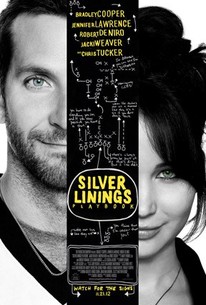
Silver Linings Playbook poster

Silver Linings Playbook

122 minutes

Cast

Selected cast credits · Film reference

Robert De Niro Pat Sr.
Jacki Weaver Dolores
Chris Tucker Danny
Anupam Kher Dr. Cliff Patel
Julia Stiles Veronica
John Ortiz Ronnie
Dash Mihok Officer Keogh
Paul Herman Randy
Matthew Russell Ricky D’Angelo
Cheryl Williams Tiffany’s Mother
Patrick F. McDade Tiffany’s Father
Brea Bee Nikki

Silver Linings Playbook | The Rewatchables

Explore episodeClose episode

Producer credits not yet identified.

Half-Assed Internet Research

Adaptation drafts; box office and Oscars; parents’ backstory; corrected scores; novel differences

In the discussion (5)
Approx. transcript time · 00:20:58Read transcript
  • The adaptation began with Matthew Quick’s 2008 novel and went through numerous script drafts and casting permutations.
  • The discussion recalls over $200 million worldwide on roughly a $20 million budget, its Toronto audience award and the gradual theatrical rollout as an increasingly unusual route to success.
  • The film received the major picture, directing, lead-acting and screenplay nominations plus supporting nominations for De Niro and Weaver; Lawrence was its sole Oscar winner.
  • Weaver reportedly helped develop the parents’ active romantic backstory and corrected the dance-score arithmetic so the average actually reached five.
  • The novel is said to give Pat more severe problems, a longer institutional stay and a different Eagles season, tentatively identified as 2006.

Roger Ebert's review

In the discussion (1)
Approx. transcript time · 00:35:14Read transcript
  • Ebert awarded three and a half stars and praised the performers, momentum and dialogue despite familiar plot machinery.

Most Rewatchable Scene

Tiffany explains the sports superstition

In the discussion (11)
Approx. transcript time · 00:35:44Read transcript
  • The dinner introducing Ronnie, Veronica and Tiffany is a scene candidate: commercial-property anxiety, Metallica for the baby, mortuary humor and painfully candid flirting establish its tone.
  • Pat throwing A Farewell to Arms out the window is another scene candidate, with his relationship to literature singled out.
  • The wedding-video search and fight with Pat’s father is proposed but another participant does not find it rewatchable; the first diner date ranks highly.
  • Tiffany repeatedly appearing on Pat’s running route provides physical screwball comedy; his frightening proximity to a former colleague shows the darker side of the same staging.
  • The dance-studio encounter, explanation of Tommy’s death and training montage with Dylan and Cash’s Girl from the North Country are scene candidates.
  • The Giants tailgate with Dr. Patel and Jake is loved despite its dark turn; Cooper’s bird gesture is a highlight.
  • John Ortiz’s convincing Eagles fandom as Ronnie is praised despite being a New Yorker; Pat’s attempt to avoid fighting leads into his father’s meltdown.
  • Tiffany rebutting Pat Senior’s superstition with winning Eagles and Phillies scores is a beloved scene, even if its appeal to Philadelphia fans could count as pandering.
  • The superstition speech is an explicit scene preference: Lawrence takes control of a noisy ensemble scene, capped by opening a beer.
  • The dance contest and final romantic letter are other scene candidates; their modest required score and disastrous finishing lift add comedy, while Tiffany’s knowledge of the competition is debated.
  • Tiffany explaining superstition is the final most-rewatchable-scene choice.
In the discussion (6)
Approx. transcript time · 00:36:40Read transcript
  • Russell receives Apex Mountain support: this uniquely personal mix of local detail, wild energy and romantic resolution reached an audience in a way his later work did not.
  • Lawrence receives clear Apex Mountain support for the Oscar win and The Hunger Games in the same year; House at the End of the Street is a minor blemish.
  • Cooper receives an affirmative Apex Mountain choice as his vulnerable acting breakthrough, while American Sniper, A Star Is Born and his later directing ambitions complicate the comparison.
  • Sports fandom in movies receives Apex Mountain support, with Fever Pitch as comparison; Upper Darby on film is also proposed.
  • iPods receive an early Apex Mountain proposal, immediately deferred.
  • Cooper’s reaction to Tiffany’s account of losing her job is later jokingly called his Apex Mountain.

Picking Nits

Phillies omission; Pat not watching games; election omission; Tommy’s route; quick window repair; football detail

In the discussion (7)
Approx. transcript time · 00:45:38Read transcript
  • The beer should have been Yuengling rather than Budweiser, a small local-authenticity nitpick.
  • The near-absence of the Phillies’ 2008 World Series win is a major nitpick: the citywide celebration should leave visible traces even in an Eagles-focused household.
  • Pat barely watching games is criticized as implausible; a counterargument reads football as a connection to his unpredictable father rather than Pat’s own central interest.
  • Omitting Obama’s election is questioned as another major event of fall 2008, though the family’s narrow focus and the movie’s limited scope are defended.
  • Tommy’s fatal trip to buy lingerie at King of Prussia seems unnecessarily far from home; nearer malls and possible other errands are debated without a settled explanation.
  • The jerseys and limited named-player references prompt questions, including the racist fan wearing a Westbrook jersey; repairing a window in seconds is implausibly easy.
  • Ronnie’s exceptional happiness at seeing Pat is questioned, then explained through friendship and his own distress about marriage and work.

What’s Aged the Best?

Lawrence and Cooper; Philadelphia sports anguish; seasonal setting; iPods; family and neighborhood detail

In the discussion (12)
Approx. transcript time · 00:47:50Read transcript
  • The sports-season structure ages well, especially the chaotic 2008 Eagles season, playoff contingencies and DeSean Jackson’s premature celebration as a metaphor for self-sabotage.
  • The Sweet Forever is another example of using a sports season as narrative backdrop, with its crime story following Len Bias’s final Maryland season.
  • Philadelphia sports anguish remains current, and the film’s blind optimism is jokingly compared with the Eagles’ current coaching mindset.
  • Lawrence and Cooper’s raw performances before their stardom solidified age especially well; Lawrence’s later choices are contrasted with this breakout energy.
  • The Halloween-to-Christmas setting makes this an unexpectedly strong holiday movie, with seasonal weather and decorations contributing.
  • Standalone iPods and casually exploring a friend’s music collection feel appealingly quaint.
  • The strong 2012 film year is raised, including Flight, Argo, The Master, Django and Lincoln.
  • Reading and talking about the Eagles as father-son connection ages well; the panel recalls sports-page etiquette and receiving box scores in summer-camp mail.
  • The question of what the family watches leads to joking memories of arguments over newspaper film reviews.
  • Shea Whigham’s brother Jake ages well: his tearful attempt to connect through insensitive comparisons and loyalty at the game; tax or real-estate law is conjectured from his advice to his father.
  • The neighbor filming Pat’s breakdown anticipates everyday recording of disturbances, though the subplot lacks closure; the crowded neighborhood’s instant awareness feels lived-in.
  • Final aged-best preferences are Philadelphia sports anguish and Jennifer Lawrence.
In the discussion (4)
Approx. transcript time · 01:00:49Read transcript
  • Crabby snacks and homemades prompt uncertainty about regional authenticity; research identifies a crab-and-cheese appetizer and fresh pasta, though the latter is not seen onscreen.
  • Raisin Bran at the diner is the food nominee, especially its boxed presentation and Pat’s attempt to make the encounter unmistakably not a date.
  • The cheesesteak-restaurant ambition is another food highlight; Budweiser rather than regional Yuengling or Rolling Rock is a missed detail.
  • The diner’s cereal service is recalled as authentic, while omitting its signature turtle soup is a missed opportunity; its spelling prompts discussion.
In the discussion (2)
Approx. transcript time · 01:04:44Read transcript
  • Scene-stealing-location choices split between the stadium exterior and the diner, with two explicit diner preferences.
  • Memories of the diner’s all-night hours, mediocre coffee, mozzarella sticks and procrastinated schoolwork support its local resonance.
In the discussion (4)
Approx. transcript time · 01:06:51Read transcript
  • Dr. Patel is the main job-competence candidate: vague advice, blurred boundaries and deliberately playing Pat’s triggering song in the waiting room are criticized as unprofessional.
  • The police officer is a runner-up for inconsistent enforcement and constant availability, though his appearances and flirting work as a comic device.
  • Pat Senior’s bookmaking is questioned because his business seems to consist of risky Eagles bets with Randy; Randy’s precise role remains uncertain.
  • The judge awarding a 5.3 is another job-competence nominee, with disagreement over whether the dance deserves that score; Dr. Patel is the final choice.
In the discussion (2)
Approx. transcript time · 01:11:31Read transcript
  • Chris Tucker’s Danny is proposed as weak link because his friend role overlaps Ronnie’s and his trips from Baltimore strain plausibility, not because of the performance.
  • Others defend Tucker’s wounded, off-kilter performance, the destabilizing humor of his visits and his jailhouse-lawyer exchange with De Niro; a hoped-for dramatic lead career did not follow.

What’s Aged the Worst?

Mental-health depiction; age gap; Russell’s reputation; late Reid years; parlay explanation disputed

In the discussion (7)
Approx. transcript time · 01:14:11Read transcript
  • The depiction of mental health and the leads’ age gap are aged-worst candidates; the film leaves Pat’s medication adherence less explicit than it could, although a later line indicates he is taking it.
  • The suggestion of special perception through mental illness raises concerns, while the parents’ fear and desire to help feel truthful; the romantic fantasy and reported personal investment of the filmmakers complicate the criticism.
  • Russell’s reputation and reported treatment of actors are aged-worst concerns; Zach recalls Bale confirming intervention during American Hustle and mentions other publicly reported confrontations. Zach Baron
  • The panel argues for interpreting the film as a personally meaningful romantic fantasy rather than requiring it to represent every experience of mental illness.
  • Memories of Andy Reid’s late Eagles years and the contrast with his later Chiefs offense are another aged-worst choice.
  • Explaining a parlay seems dated given gambling’s increased familiarity, though another participant appreciates the explanation.
  • The near-erasure of the Phillies championship is recalled as an aged-worst issue and deferred to nitpicks.

The Stephen A. Smith Hottest Take Award

Garbage bag; Weaver casting; De Niro nomination; Randy; Tiffany’s manipulation; accents

In the discussion (6)
Approx. transcript time · 01:22:28Read transcript
  • The garbage bag is disliked as another embarrassing Philadelphia image and its usefulness is questioned; a pickle-juice alternative is joked about.
  • Jacki Weaver is called good in the role but questionable casting because the mother could have supplied a convincing Philadelphia accent; Melissa Leo is proposed instead.
  • De Niro’s Oscar nomination and comeback narrative are questioned even while his performance and renewed engagement are appreciated.
  • Randy’s behavior is considered implausibly tolerated: a Cowboys fan flirting with Pat Senior’s wife and threatening the family’s livelihood would face confrontation.
  • Tiffany is provocatively compared to the Joker for manipulating Pat through the forged letter and promise of his estranged wife’s presence.
  • The characters feel psychologically Philadelphian without sounding local; avoiding accents has defenders, while a genuinely local actress is imagined and Nikki’s actor is identified as being from Philadelphia.

Casting What-Ifs

Vaughn/Deschanel; Wahlberg; Hathaway; other reported Tiffany candidates

In the discussion (3)
Approx. transcript time · 01:28:37Read transcript
  • Reported earlier casting included Vince Vaughn with Zooey Deschanel, Mark Wahlberg as Pat and Anne Hathaway as Tiffany; the panel doubts these alternatives could match the final pairing.
  • Reported Tiffany candidates include Elizabeth Banks, Kirsten Dunst, Angelina Jolie, Blake Lively, Rooney Mara, Rachel McAdams, Andrea Riseborough, Olivia Wilde and Emma Thompson; some claims draw skepticism and the options illustrate the risk of conventional quirky-romance casting.
  • Lawrence’s toughness and partly goth styling are essential to avoiding cuteness; Vaughn might make a functional but lesser film, while Rob McElhenney and Kat Dennings are joking alternatives.
In the discussion (1)
Approx. transcript time · 01:33:26Read transcript
  • Amy Adams is the recasting-couch suggestion for Nikki to make the final romantic choice less obvious, though the small, unappealing assignment is joked about.

Sequel, Prequel, Limited Series, or All-Black Remake

Untouchable; parents’ courtship prequel proposed

In the discussion (1)
Approx. transcript time · 01:44:01Read transcript
  • The film is called untouchable; a parents’ courtship prequel is imagined but a sequel is rejected, with later Eagles turmoil joked about as a sequel already happening.

Probably Unanswerable Questions

Pat’s fandom; taped shoes; Nikki whisper; medication; post-Super Bowl viability

In the discussion (2)
Approx. transcript time · 01:45:44Read transcript
  • Questions include whether Pat cares enough about the Eagles and why his shoes are taped; his casual clothing is compared with contemporary menswear.
  • Taped shoes are explained tentatively as makeshift fasteners rather than repairs; Pat’s whisper to Nikki and medication adherence remain questions, while the story is judged viable even after the Eagles’ Super Bowl win.

The Coach Finstock Award for Best Life Lesson

Stand up for your brother; bonding through a fight

In the discussion (1)
Approx. transcript time · 01:49:11Read transcript
  • Life-lesson suggestions are playing Ride the Lightning for a baby, bonding through drinking and fighting, and always defending a brother; the first suggestion draws doubt.

Producer review

First viewing; enjoyed the brisk romantic comedy

In the discussion (1)
Approx. transcript time · 01:50:42Read transcript
  • The respondent addressed as Producer Craig describes a first viewing and fascination with East Coast sports-family culture; he appreciates the film’s quick, funny storytelling and satisfying romantic conclusion.

More from the conversation

The Philadelphia friends describe the episode assignment before the Eagles playoff as joking ritual humiliation from Bill Simmons.
Approx. transcript time · 00:01:13Read transcript
Eagles fandom is described as an unhealthy but irresistible relationship; the film captures a sports team organizing a city’s daily life and personal memories.
Approx. transcript time · 00:04:31Read transcript
The discussion contrasts emotional attachment to players, technical football obsession, and accepting defeat; parenthood exposes the intensity of reactions and constant information changes fandom.
Approx. transcript time · 00:07:04Read transcript
Watching late games in Philadelphia feels different from Los Angeles; the film accurately captures the gray autumn and winter light and the city’s mood.
Approx. transcript time · 00:10:00Read transcript
The film’s repeatable scenes and cable or streaming afterlife prompt a proposal that 2012 was a last great Rewatchables era; its romance and mental-health story also reflects the Eagles’ relationship with Philadelphia.
Approx. transcript time · 00:12:26Read transcript
Zach’s earlier Grantland account of Philadelphia’s psychology still resonates: anticipation of failure, the little-brother relationship to New York, and a Super Bowl win that cannot erase old resentments.
Approx. transcript time · 00:14:27Read transcript
The championship grace-period idea draws disagreement; remembered losses overshadow the successful Andy Reid years and the 2008 run depicted in the film.
Approx. transcript time · 00:18:23Read transcript
The film’s emotional vulnerability is compared with the shift from ironic indie rock to emo; Russell makes characters pursue feelings and connection rather than conventional plot prizes.
Approx. transcript time · 00:21:44Read transcript
Its rapid dialogue, romantic banter, dance contest and seemingly improvised plot work as an old-fashioned screwball comedy with unusually explicit violence and darkness.
Approx. transcript time · 00:23:18Read transcript
The Philadelphia Story is raised as a double feature for damaged people finding connection; a darker filmed version and a longer institutional stay in the novel are discussed, with eight months clarified for the film.
Approx. transcript time · 00:25:09Read transcript
This is proposed as Russell at his best, with affection for I Heart Huckabees; his public persona is reserved for the aged-worst discussion.
Approx. transcript time · 00:26:12Read transcript
Zach recounts interviewing Russell about Cooper’s anger and dissatisfaction around Wedding Crashers: the film exposed emotional qualities behind his earlier pretty-boy casting and marked a prestige-career turning point.
Approx. transcript time · 00:27:10Read transcript
Russell recognized what Lawrence could bring despite her youth for the written role; the unusually successful tonal balance proved difficult to repeat in later films.
Approx. transcript time · 00:29:45Read transcript
Lawrence’s performance alongside The Hunger Games in the same year displays comedy, drama, dancing and forceful monologues; her age difference with Cooper seems implausible on paper but works onscreen.
Approx. transcript time · 00:30:52Read transcript
Zach recalls Cooper testing his Philadelphia credentials during an interview on the day of Nick Foles’s seven-touchdown game; shared enthusiasm also became argumentative.
Approx. transcript time · 00:32:45Read transcript
The Bear is described as a spiritual successor through family tension, second-city feelings and staking everything on sandwiches.
Approx. transcript time · 01:45:37Read transcript
Tiffany’s blunt literary summaries and Pat waking his parents to discuss Hemingway inspire jokes about family communication and football analysis.
Approx. transcript time · 01:48:16Read transcript
Producer Craig says this was a first viewing and contrasts the film’s intense East Coast sports-family culture with his Bay Area experience.
Approx. transcript time · 01:50:42Read transcript
The brisk, funny romantic fantasy is praised; a contemporary television version might overextend the darker material, while the letter and fairy-tale dance-and-game finale remain satisfying.
Approx. transcript time · 01:51:35Read transcript
A hypothetical closing card about the later championship loss would undercut the happy ending in a characteristically Philadelphia way.
Approx. transcript time · 01:52:47Read transcript
An Eagles-player cameo is imagined, but keeping players and most actual game footage offscreen is defended as consistent with ordinary fandom and the emotional story.
Approx. transcript time · 01:53:12Read transcript
The football dialogue is criticized as insufficiently authentic, then defended as reflecting how fans talked before the recent spread of technical analysis.
Approx. transcript time · 01:54:09Read transcript