‹ All movies
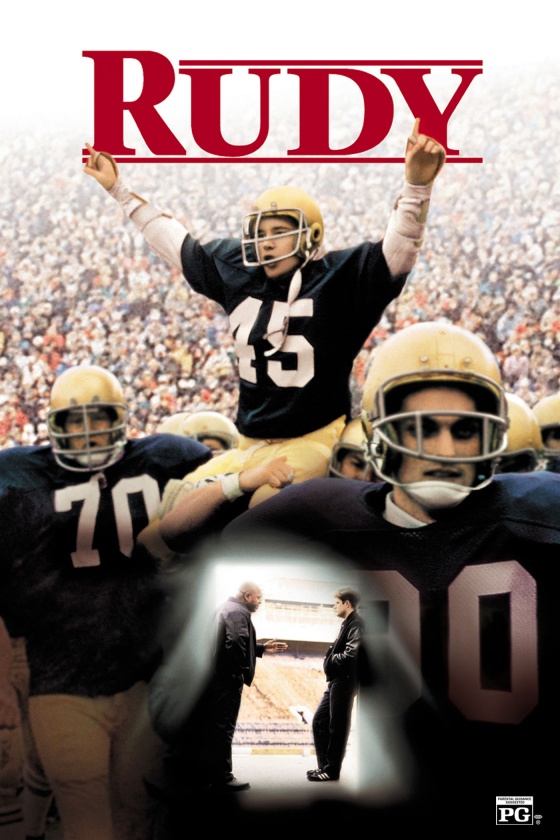
Rudy poster

Rudy

112 minutes

Cast

Selected cast credits · Film reference

Sean Astin Rudy
Ned Beatty Daniel
Jason Miller Ara Parseghian
Lili Taylor Sherry
Robert Prosky Father Cavanaugh
Greta Lind Mary
Jon Favreau D-Bob
Chelcie Ross Dan Devine
Ron Dean Coach Yonto
John Beasley Coach Warren
Vince Vaughn Jamie
Kevin White Roland

Rudy | The Rewatchables

Explore episodeClose episode

Most Rewatchable Scene

Final game, tunnel entrance and celebration

In the discussion (19)
Approx. transcript time · 00:30:22Read transcript
  • Pete fighting Frank in the bar and the subsequent fatal mill accident are honorable mentions, including Rudy’s slow-motion reach.
  • Rudy seeing the stadium for the first time is an honorable mention, enhanced by the score and Dutton’s entrance.
  • Rudy reciting Rockne’s speech in the locker room and Fortune’s emotional reaction are nominated.
  • Admission to Notre Dame is called the first truly rewatchable scene, though Astin’s crying is criticized as forced compared with Toy Soldiers.
  • Astin reportedly described struggling to cry until the director asked what he feared, unlocking tears on the final take.
  • The assistant coach’s harsh tryout speech, the practice montage and Dean confirming Rudy made the team begin an especially strong stretch.
  • Football practice montages are praised for violence, music and repeated hits; The Program, Wildcats, Friday Night Lights and Remember the Titans provide comparisons.
  • Fortune promising to attend if Rudy dresses is a small favored moment.
  • The tackle demolishing Rudy, then easing up, leads to the parking-lot understanding and Jamie calling him a showboat.
  • Rudy asking to dress for one game is nominated, with skepticism about his entitlement and a joke that a departing coach can promise anything.
  • Fortune confronting Rudy after he quits is praised for acting, writing and the unexpected revelation that Fortune played at Notre Dame and regretted quitting amid perceived racial discrimination.
  • A hypothetical earlier scene revealing Fortune’s history might improve the first hour without losing the final motivational speech; no additional Dutton appears in the deleted scenes.
  • The jersey-drop scene is initially the top choice, with Ross’s restrained emotion particularly praised.
  • The jersey protest is reported as invented; Devine supposedly supported playing Rudy and objected to his villainous portrayal, while Montana also denied he would surrender a jersey.
  • The jersey scene remains emotionally effective despite its implausibility, while Steele surrendering his final home-game tunnel entrance is considered even harder to believe.
  • The pregame speech, tunnel entrance, final opportunity, sack, reaction shots and shoulder carry build the finale’s emotional force.
  • The halfback touchdown pass is criticized as invented and an unearned attempt to redeem Jamie after his hostility, though the score still makes the sports ending work.
  • Montana reportedly described the shoulder carry as a joke by the team’s pranksters; that interview damaged the film’s reputation in the social-media era.
  • Both final scene choices settle on the ending, especially Beatty and Dutton’s reactions; the jersey scene remains a favorite and Frank’s restrained response is amusing.

What’s Aged the Best?

Goldsmith score; rejection montages; Astin’s athleticism; blunt parental realism; supporting cast; Devine speech; sports-movie character types

In the discussion (10)
Approx. transcript time · 00:41:33Read transcript
  • The montage of Rudy repeatedly failing to make the dress list is praised as an effective disappointed-hope sequence with strong music.
  • The score, loose true-story disclaimer, rejection-letter montage and fathers asking children’s friends whether they have their own home are affirmative selections.
  • Astin’s athletic running and tackling look convincing, with Toy Soldiers and Seagal’s running providing comparisons.
  • Adults discouraging unrealistic childhood dreams is praised as a refreshing contrast with universal encouragement, including the bus-stop story about the failed cattle business.
  • Jamie’s disappointing blue-chip-recruit persona and sports villains who complain that the hero makes them look bad are enjoyable familiar types.
  • Devine’s nobody-pushes-us-around speech has a lasting arena-jumbotron afterlife.
  • Seeing early Vaughn after Swingers and Old School adds comic expectations to his exchanges with Rudy.
  • Some Notre Dame fans’ vehement dislike of the movie is itself an amusing positive.
  • Tryouts reportedly appears in at least twelve other film trailers, demonstrating the score’s power to sell unrelated movies.
  • Ross’s Major League, Hoosiers and Rudy trifecta establishes his sports-movie supporting-player stature, with Trouble with the Curve, The Express and possibly The Last Boy Scout also cited.

The Great Shot Gordo Award for Most Cinematic Shot

Rudy in the stadium corner; crane shot above the stadium

In the discussion (2)
Approx. transcript time · 00:58:49Read transcript
  • The camera behind Rudy as he takes in the stadium is a favored shot.
  • The crane shot rises above the stadium during a real game and reportedly catches a touchdown, despite visible anachronistic cars.
In the discussion (3)
Approx. transcript time · 00:59:55Read transcript
  • The real Rudy’s later motivational-speaking persona, self-promotion and reported securities-fraud settlement are argued to overshadow the film.
  • An ESPN profile is cited for an abrasive personality and many efforts to monetize the story, including a stage show, chicken promotion and documentary.
  • Manti Te’o reportedly described an awkward first meeting when Rudy told him to know his history; a better subsequent relationship does not erase that first impression.

What’s Aged the Worst?

D-Bob’s dating arrangement; staged interception; invented events and characters; historical omissions

In the discussion (8)
Approx. transcript time · 01:02:34Read transcript
  • Rudy’s role finding women for D-Bob is criticized as implausible and creepy, compounded by his repeatedly worn secondhand jacket and uncertain hygiene.
  • Steele’s interception touchdown looks staged because the quarterback throws directly at him; realistic interception choreography is difficult, but the result resembles deliberate point shaving.
  • The jersey protest and villainous Devine portrayal are reported as inaccurate; Devine’s later condemnation and Montana’s account of no chanting and a prank shoulder carry are cited.
  • Frank is reportedly invented from several hometown doubters, while Fortune combines several people rather than representing one actual janitor.
  • The movie omits four Navy years, reportedly invents sleeping in the stadium and dramatizes admission that actually required four good Holy Cross semesters.
  • The real Rudy is described as a strong five-foot-six,185-pound practice player, and the Penn State game is called an anachronism used because that opponent was present during filming.
  • The discussion is uncertain whether Pete’s death happened as shown, but rejects blaming the real Rudy for the accident.
  • Rockne’s famous speech is judged overrated and dated in performance.

Is There a Better Title for This Movie?

The Stalking Irish; Take Us Out

In the discussion (1)
Approx. transcript time · 01:07:01Read transcript
  • The Stalking Irish is preferred to the competing Take Us Out suggestion; Rudy is nevertheless acknowledged as effective in streaming thumbnails.

The Coach Finstock Award for Best Life Lesson

Chase your dreams; a friend’s death as a dark motivator

In the discussion (2)
Approx. transcript time · 01:07:49Read transcript
  • The same dream quotation is also the life-lesson choice.
  • A dark final lesson says a best friend’s violent death motivates following one’s dreams.

The Stephen A. Smith Hottest Take Award

Frank was right; exaggerate the invented history further

In the discussion (2)
Approx. transcript time · 01:08:10Read transcript
  • Frank is argued to have been right: following the dream costs Rudy relationships, money and physical health for a brief appearance, while an ordinary working life could have been happier.
  • If historical invention is acceptable, a deliberately exaggerated version could have Rudy mentor Montana, invent the playoff or NIL, and suggest ESPN or betting businesses.
In the discussion (2)
Approx. transcript time · 01:15:06Read transcript
  • Nominees include Pete, Prosky, Vaughn, the equipment manager, both assistant coaches, Steele and Astin’s stunt double.
  • The equipment manager is a deliberately minor personal choice for his stiff single line, while Vaughn is judged the likely winner from two contrasting scenes.

Apex Mountain

Sean Astin; Charles S. Dutton; modern-era Notre Dame football; Ron Dean; Vincent Vaughn billing; all-time centers

In the discussion (8)
Approx. transcript time · 01:19:21Read transcript
  • Astin’s signature role is judged Rudy despite personal Toy Soldiers preferences and the scale of Lord of the Rings; the suggestion Encino Man followed it is a podcast chronology claim, not verified metadata.
  • Notre Dame initially receives a no, then its modern football era receives support for1988–94 and the1993 season; Dutton receives clear support alongside Roc.
  • Ross’s peak is placed at Major League, while Vaughn receives a joking yes specifically for his full Vincent screen billing rather than his later Vince career.
  • Dean’s simultaneous Rudy and The Fugitive appearances make a persuasive career-peak case.
  • All-time centers in informal football receive a yes, with the position’s limited appeal mocked.
  • Vaughn/Favreau collaborations peak at Swingers; Rockne speeches are assigned an alternative in The Bad News Bears in Breaking Training and criticized as overrated here.
  • Astin’s crying is preferred in Toy Soldiers despite anticipated Return of the King objections.
  • Unsupportive sports-family members peak with Paulie, including the later loss of Rocky’s money; Rocky’s unpaid Drago fight also deserves blame.
In the discussion (2)
Approx. transcript time · 01:24:39Read transcript
  • Cruise is the lead-role choice through All the Right Moves and Risky Business comparisons; Hanks might fit D-Bob or a coach, but those are not lead-role answers.
  • Cruise’s short stature might discourage taking Rudy, while an alternative casts his aggressive Taps persona as Frank.

Sequel, Prequel, Limited Series, or All-Black Remake

Post-film Rudy black comedy; displaced player’s dark sequel; family at the mill

In the discussion (2)
Approx. transcript time · 01:31:46Read transcript
  • A King of Comedy-style sequel could follow the real Rudy’s later self-promotion; another follows the player displaced from the dress list into a serial-killer story.
  • A return to the mill could explore Rudy’s brother taking up with his longtime girlfriend soon after he leaves.

Just One Oscar

Jerry Goldsmith

In the discussion (1)
Approx. transcript time · 01:34:29Read transcript
  • Goldsmith is the immediate Oscar choice with agreement.

What Piece of Memorabilia Would You Want From This Movie?

Fortune’s corduroy jacket and outfit

In the discussion (2)
Approx. transcript time · 01:40:56Read transcript
  • Candidates include Rudy’s repeatedly worn jacket, his game jersey, Jamie’s or Steele’s jerseys, and Devine’s named jacket.
  • Fortune’s stylish final corduroy jacket, scarf and hat are the explicit personal choice.

Who Won the Movie?

Jerry Goldsmith

In the discussion (2)
Approx. transcript time · 01:41:47Read transcript
  • Notre Dame is initially chosen for the film’s affectionate, almost fetishistic presentation of the university.
  • The counterargument says Notre Dame declined after this peak, whereas Goldsmith’s music retains its power; the discussion ends with agreement on Goldsmith.
Podcast choices
Speaker not identified
Jerry Goldsmith