
‹ All movies
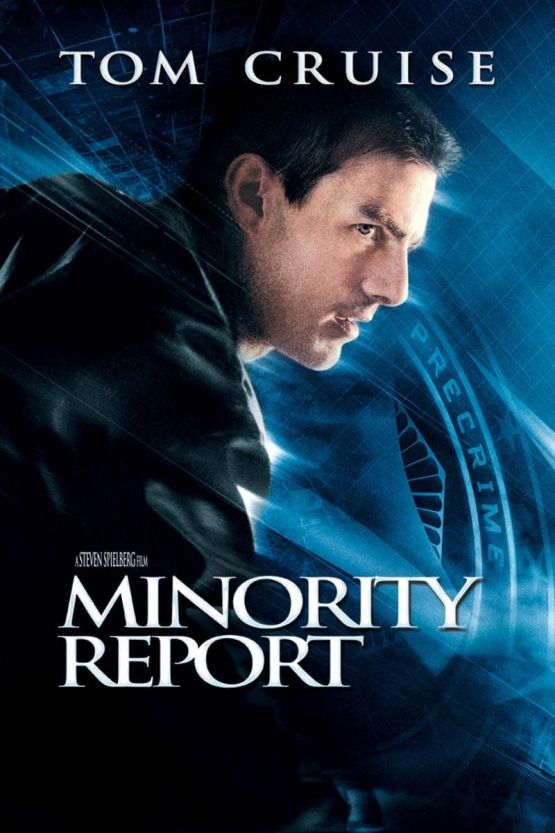
Minority Report poster

Minority Report

146 minutes

Cast

Selected cast credits · Film reference

Tom Cruise Officer John Anderton
Colin Farrell Danny Witwer
Max von Sydow Director Lamar Burgess
Lois Smith Dr. Iris Hineman

Minority Report | The Rewatchables

Explore episodeClose episode

Producer credits not yet identified.

What’s Aged the Best?

Seamless world-building; hand-operated displays; Agatha; real-time countdown; adult themes

In the discussion (7)
Approx. transcript time · 00:15:22Read transcript
  • Future technology is embedded in action without exposition; personalized ads establish the surveillance obstacle that leads naturally to the disturbing eye replacement.
  • Damaged noir characters, including the blind drug dealer, disgraced surgeon and wheelchair-using prison supervisor, preserve Philip K. Dick’s distinctive world.
  • Cruise manipulating pre-crime images with his hands holds up better than Disclosure; modern headset use and possible movement training are discussed.
  • Morton’s unsettling Agatha is praised despite being difficult company; her victimhood deliberately interrupts the action and humanizes the film.
  • The stated remaining time of 51 minutes 30 seconds reportedly matches the time left in the film.
  • Ordinary domestic routines interrupted by action and Cruise saying the film’s title are praised.
  • Sex, adultery, drugs and murder represent adult Spielberg, although his apparent discomfort with sex is joked about.

Most Rewatchable Scene

Fifteen-minute escape and factory sequence

In the discussion (20)
Approx. transcript time · 00:37:10Read transcript
  • The Howard Marks intervention introduces pre-crime and red-ball urgency efficiently; the film is praised for sequences that flow across individual scenes.
  • The moving-hands analysis revealing a merry-go-round is a scene highlight.
  • Discovering himself in the Leo Crow murder prediction and hiding the ball showcases rapidly changing emotions conveyed through Cruise’s face.
  • The fifteen-minute escape from Wally’s warning through the completed car is praised as sustained action comparable to John Wick’s nightclub run.
  • The elevator encounter, apparent refuge with the older mentor and jumping across futuristic cars are escape-sequence highlights.
  • The jetpack chase, midair grab and intrusions into ordinary apartments are admired.
  • The crane fight and car assembly climax sustain the chase; autonomous machinery enclosing the fugitive reinforces the film’s technological threat, alongside Lexus placement.
  • The swimming-pool flashback to the missing child is praised for breath-holding foreshadowing.
  • The spider search and overhead view across apartments are admired; occupants briefly pause everyday activity for scans, and visual links to The Matrix and John Wick 4 are noted.
  • The futuristic pleasure club is a scene candidate, compared with Total Recall’s imaginative nightlife.
  • The confrontation where Cruise is told he still has a choice about killing Leo Crow is nominated.
  • Agatha’s intensity during the Leo Crow scene is criticized as unpleasant company, then defended as the consequence of her captivity; exploiting her gift for sports wagers is joked about.
  • Exposing Burgess during an honoring banquet is compared with The Fugitive and admired as an ideal public reveal.
  • The fifteen-minute escape sequence receives an explicit favorite-scene selection.
  • The greenhouse is nominated for its odd tonal shift and explanatory role; the kiss reportedly surprised Cruise during filming.
  • The disgraced eye surgeon and unsettling nurse are nominated as a creepy Philip K. Dick-style encounter.
  • The first Farrell–Cruise meeting is nominated for the ball-catching demonstration and clashing views on pre-crime.
  • The fifteen-minute escape receives another explicit favorite-scene selection.
  • The spider search is praised for suspense and for showing residents treating invasive scans as the price of a murder-free society.
  • An invited additional response agrees with the factory action sequence as the most entertaining portion.

The most "year the movie came out" thing

Cops in 2054; physical media; absent social media; surveillance anxiety

In the discussion (4)
Approx. transcript time · 00:53:48Read transcript
  • Cruise’s pre-controversy persona, absent social media and a futuristic USA Today reflect 2002 assumptions.
  • Young mustached Farrell and physical memory discs rather than streaming are period details.
  • Cops continuing into 2054 is offered as the strongest period-detail selection.
  • Post-September 11 concerns about unconditional government surveillance are another period marker.
In the discussion (3)
Approx. transcript time · 01:01:28Read transcript
  • The overhead spider search across apartments is the favored shot; the lobby composition aligning Agatha with Anderton is an alternative.
  • The Washington Monument composition and a camera move placing McDonough’s head between opposed characters are additional admired shots.
  • Camera movement incorporates several conversational perspectives into one continuous shot instead of conventional separate setups.
In the discussion (2)
Approx. transcript time · 01:07:01Read transcript
  • No weak link is initially offered; Lara’s limited characterization is considered, with resistance to defaulting to a female character.
  • Burgess accidentally revealing knowledge that the woman drowned is the favored weak link because it contradicts his elaborate cunning.

What’s Aged the Worst?

Missing phones; physical discs; highway CGI; mid-film slowdown; eye and food disgust

In the discussion (4)
Approx. transcript time · 01:07:53Read transcript
  • Missing mobile phones, unconvincing highway-jump CGI and fragile physical data slides are criticized; the cloud would remove a useful physical chase object.
  • The Dr. Iris-to-eye-surgeon stretch is criticized as a long slowdown and tonal departure, then defended as a deliberate passage into fantasy.
  • The failed 2015 television series is recalled, alongside the fictional explanation tying pre-cog abilities to prenatal drug exposure.
  • Eye procedures and spoiled food remain hard to watch; the car-jump effects are compared unfavorably with subsequent advances.
In the discussion (3)
Approx. transcript time · 01:17:30Read transcript
  • Stormare is considered too recognizable and better suited to Dion Waiters; Patrick Kilpatrick and Steve Harris are candidates, with Harris’s television recognition qualified.
  • Arye Gross is considered recognizable in his own right; The Experts prompts an enthusiastic recommendation.
  • Steve Harris receives an explicit choice; his relationship to Wood Harris inspires an imagined role in The Wire.

Apex Mountain

Nokia Wave; CruiseSpielberg collaborations; Spielbergian techno-noir; Samantha Morton; pre-cogs and pre-crime

In the discussion (7)
Approx. transcript time · 01:24:33Read transcript
  • Minority Report is called the apex of Nokia Wave: tactile near-future technology, paranoia and state surveillance, with GoldenEye, Bourne, Ronin and related thrillers offered as context.
  • Apex claims for the two individual careers are rejected, but their collaboration is affirmed over War of the Worlds; that film is still defended.
  • Spielbergian techno-noir is an affirmative Apex subject, with this film preferred to AI.
  • Evil von Sydow roles are not considered at their peak here; Strange Brew and Victory are discussed.
  • Samantha Morton is affirmed at a career peak around this film and Morvern Callar.
  • McDonough is rejected as a single-film peak because of a long run of recognizable roles.
  • Pre-cogs and pre-crime departments are affirmed; Washington films and Philip K. Dick adaptations are not.
In the discussion (2)
Approx. transcript time · 01:34:33Read transcript
  • Prestige television is favored, potentially as an Apple-style cerebral adaptation; a limited Anderton story or ongoing pre-crime series are alternatives.
  • A first-arrest prequel, multiple minority reports and a cheap Law & Order: Pre-Crime procedural are additional possibilities.

Is This Movie Better With…?

Doris Burke; Ryan Ruocco

In the discussion (2)
Approx. transcript time · 01:35:39Read transcript
  • A Doris Burke-style speech praising Agatha is performed; the recurring impression is acknowledged as becoming its own character.
  • A Ryan Ruocco call of Burgess’s suicide is proposed.

Just One Oscar

Janusz Kaminski’s cinematography

In the discussion (1)
Approx. transcript time · 01:36:25Read transcript
  • Kaminski’s distinctive cinematography is the Oscar choice; continued study of the film is praised despite limited awards recognition.

The Coach Finstock Award for Best Life Lesson

Digging up the past gets you dirty; Everybody Runs

In the discussion (2)
Approx. transcript time · 01:40:27Read transcript
  • The warning that digging up the past only gets one dirty is offered as a life lesson.
  • Everybody Runs is another life-lesson choice, with agreement.