
‹ All movies
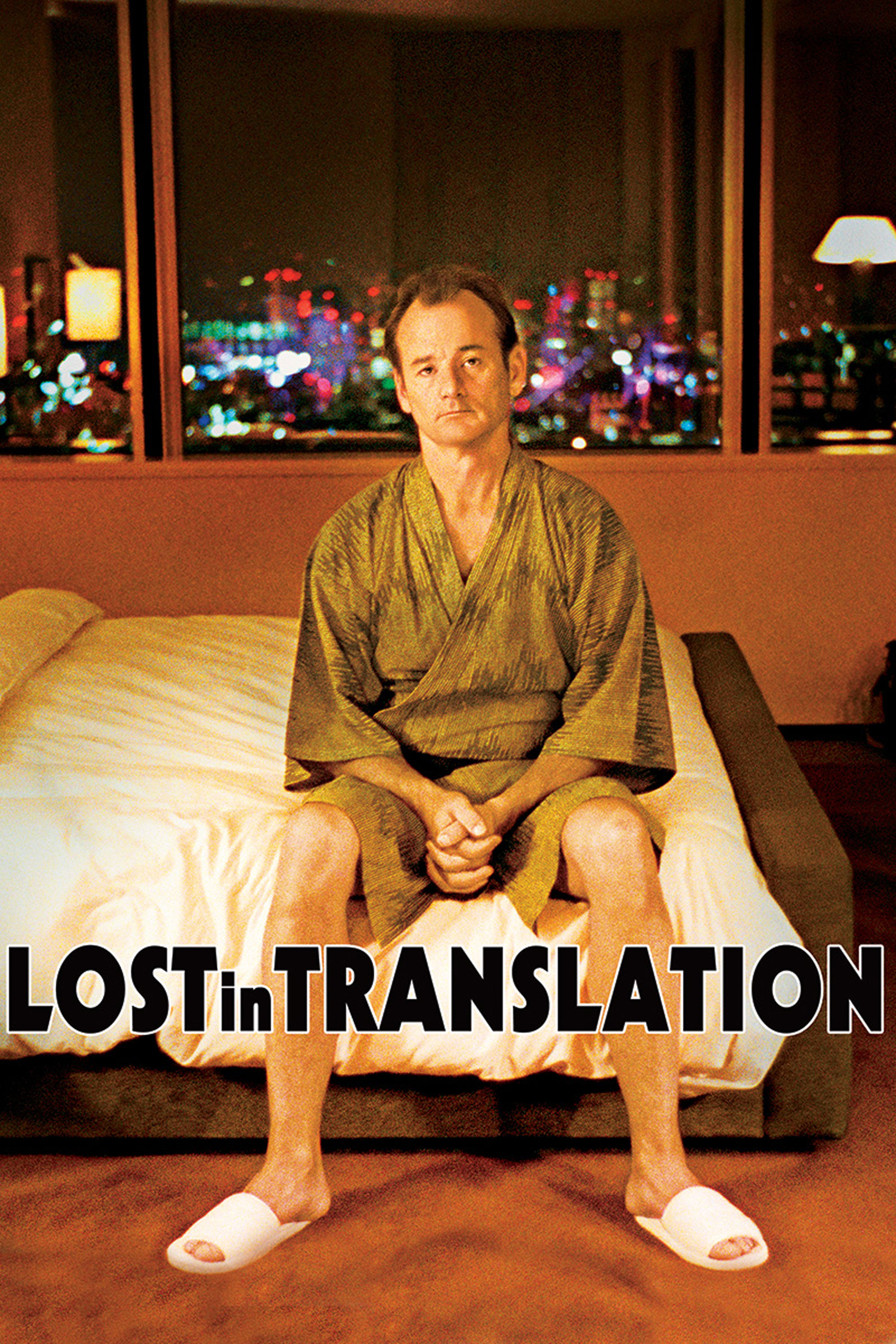
Lost in Translation poster

Lost in Translation

102 minutes

Cast

Selected cast credits · Film reference

Lost in Translation | The Rewatchables

Explore episodeClose episode

Half-Assed Internet Research

Personal inspiration; Murray commitment; Johansson casting; awards and box office; lounge singer; Suntory commercial; Gondry dispute; golf course

In the discussion (10)
Approx. transcript time · 00:14:44Read transcript
  • Coppola reportedly pursued Murray for six months and began the $4 million production without a signed contract; his participation remained uncertain until he arrived shortly before shooting.
  • The bed conversation reportedly had to be postponed a day because Murray and Johansson were not getting along.
  • Coppola reportedly admired Johansson in Manny & Lo and her low-voiced, young-Lauren-Bacall quality, choosing her before testing chemistry with Murray.
  • Coppola is described as the first woman nominated for writing, directing, and producing in one year, winning Original Screenplay.
  • The film reportedly made $118.7 million on a $4 million budget.
  • Charlotte’s experience is connected to Coppola feeling like an ornament alongside Spike Jonze and to her own youthful uncertainty.
  • Catherine Lambert was reportedly a real lounge singer discovered performing in Tokyo in 2001, then tracked down for the film.
  • The Suntory commercial was reportedly inspired partly by a real 1970s commercial featuring Coppola’s father and Akira Kurosawa; the whisky is identified as seventeen-year-old Hibiki.
  • Michel Gondry reportedly confronted Coppola at the New York premiere about the unkind Jonze-based husband and later described the disagreement in a 2006 New York Times interview.
  • The golf course is identified by a name garbled in the transcript and praised as beautiful.
In the discussion (3)
Approx. transcript time · 00:16:55Read transcript
  • Murray is considered irreplaceable; a younger Nicholson is entertained but his debonair, roguish persona would change the film.
  • Pitt and DiCaprio are rejected because their screen personas make it difficult to believe they would not pursue Charlotte physically.
  • Will Ferrell is proposed as a contemporary counterpart who could benefit from a restrained dramatic role like Murray’s, though he would need to shed familiar comic habits.

Roger Ebert's review

In the discussion (1)
Approx. transcript time · 00:37:07Read transcript
  • Ebert gave four stars and praised Murray’s internally developed Bob Harris as simultaneously happy, sad, and resigned to being stuck.

Casting What-Ifs

None found

In the discussion (1)
Approx. transcript time · 01:00:03Read transcript
  • No alternative casting is found; the hypothetical backup if Murray declined remains unknown.

Picking Nits

Marriage timeline; restrained romance; unplanned kiss knowledge; mailed carpet samples

In the discussion (5)
Approx. transcript time · 01:08:45Read transcript
  • Charlotte’s marriage timeline is questioned: a recent Yale philosophy graduate in her early twenties marries a somewhat older traveling photographer before finding direction.
  • The defense is that the rash marriage and regret are central themes, conveyed sufficiently by the shrine call and complaint about her husband’s hair products.
  • Not making a sexual move in bed is defended despite possible signals: the relationship mixes romantic possibility with a paternal quality, and Bob discusses his children.
  • Learning that the final kiss was unplanned diminishes the preferred mystery of the ending.
  • Sending carpet samples to Tokyo during an initially three-day trip seems absurd; the defense is that this exaggeration illustrates the couple’s strained marriage.

Probably Unanswerable Questions

Farewell whisper interpretations; fire alarm; Charlotte’s marriage and future

In the discussion (11)
Approx. transcript time · 01:11:51Read transcript
  • The farewell whisper was reportedly improvised after scripted dialogue failed, with Coppola asking Murray to whisper something the audience would not hear; he also improvised the kiss.
  • One proposed enhanced-audio reading tells Charlotte to speak the truth to John before his next business trip; it is rejected as overly specific.
  • Another possible whisper reading says he must leave but will not let that come between them; this remains an interpretation, not verified dialogue.
  • A further interpretation asks Charlotte to promise to tell her husband the truth; it feels more plausible to the discussants but remains uncertain.
  • The truth-telling interpretation is read as Charlotte recognizing she can move past feeling stuck, perhaps by acknowledging dissatisfaction with her marriage.
  • A preferred imagined whisper thanks Charlotte for being special and passing through Bob’s life; another imagines romantic reassurance that she will figure things out.
  • Bob may have pulled the final-night fire alarm to see Charlotte again without appearing desperate; the theory receives enthusiasm.
  • Charlotte is firmly expected to leave her marriage, including the interpretation that Coppola wrote toward that outcome.
  • A present-day Charlotte is imagined back in New York and then possibly eastern Los Angeles.
  • Another future places Charlotte in Greenwich or Darien, married to a hedge-fund worker with children and selling real estate.
  • Charlotte might instead be a self-consciously distinctive mother blogger or podcaster whose personality drives the work.

Producer review

Age-dependent resonance; restrained relationship; final kiss disputed

In the discussion (4)
Approx. transcript time · 01:22:48Read transcript
  • A first viewing inspires identification with Charlotte’s early-twenties aimlessness and the expectation that the film will reveal different meanings with age. — Craig Horlbeck
  • The unusual older-man/younger-woman bond is appreciated for avoiding sex, and the final hug is experienced as a relief. — Craig Horlbeck
  • The final kiss is criticized as an unnecessary step toward sexuality; the awkward earlier elevator kisses were sufficient.
  • The opposing defense reads the final kiss as sincere emotional closure rather than an invitation to go further; agreement remains that an overtly sexual kiss would be wrong.