
‹ All movies
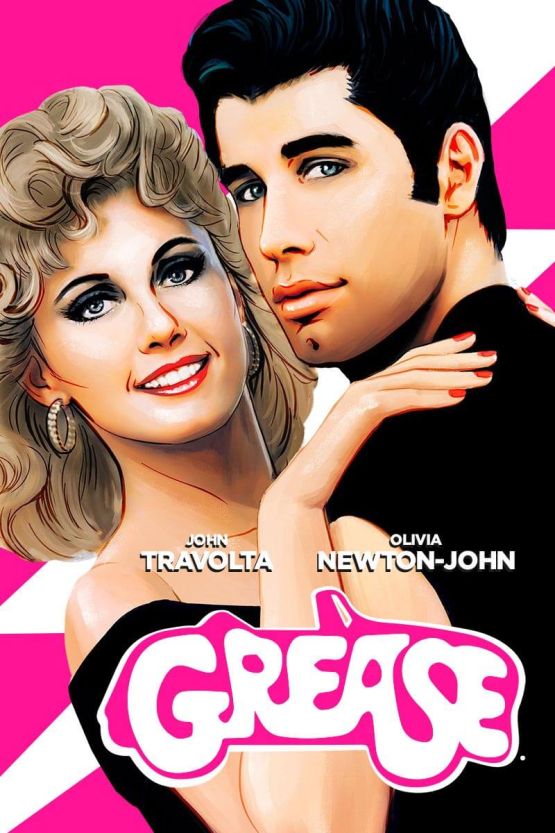
Grease poster

Grease

110 minutes

Cast

Selected cast credits · Film reference

Jeff Conaway Kenickie
Barry Pearl Doody
Kelly Ward Putzie
Didi Conn Frenchy
Dinah Manoff Marty
Eve Arden Principal McGee
Frankie Avalon Teen angel
Edd Byrnes Vince Fontaine
Sid Caesar Coach Calhoun
Alice Ghostley Mrs. Murdock
Dody Goodman Blanche
Sha-Na-Na Johnny Casino & The Gamblers
Susan Buckner Patty Simcox
Lorenzo Lamas Tom Chisum
Fannie Flagg Nurse Wilkins
Dick Patterson Mr. Rudie
Eddie Deezen Eugene
Darrell Zwerling Mr. Lynch
Ellen Travolta Waitress
Annette Charles Cha Cha
Barbi Alison Dancer
Carol Culver Dancer
Cindy DeVore Dancer
Sandra Gray Dancer
Mimi Lieber Dancer
Judy Susman Dancer
Larry Dusich Dancer
Daniel Levans Dancer
Sean Moran Dancer
Greg Rosatti Dancer
Andy Roth Dancer
Andy Tennant Dancer

Grease | The Rewatchables

Explore episodeClose episode

Most Rewatchable Scene

You’re the One That I Want finale

In the discussion (23)
Approx. transcript time · 00:09:01Read transcript
  • You’re the One That I Want is predicted as the scene winner for the song, dancing, chemistry, and Sandy’s leather-clad entrance.
  • The animated opening credits are nominated and praised, but their 1970s look and lack of connection to the film’s 1950s setting are questioned.
  • The animated opening is defended as a guide to the satire and a bridge from 1978 into 1958, despite having little in common with the rest of the film.
  • Summer Nights is nominated, with its back-and-forth structure and ending split screen praised.
  • Travolta combing his hair while the men shimmy on the bleachers is singled out as an iconic detail.
  • The number is praised for establishing the premise and the stars’ talent in about four minutes.
  • The choreography and camerawork are praised for keeping the performers visible and moving with them, unlike some later hurried numbers.
  • Look at Me, I’m Sandra Dee is nominated, with a wish for more of Sandy’s reaction when she discovers the teasing.
  • Greased Lightnin’ is nominated and Travolta’s performance praised, despite regret that Conaway lost the number.
  • Giving Travolta the number is defended because he needed an uptempo showcase beyond the shared Summer Nights and the Sandy ballad.
  • Both diner scenes are enjoyed, with a wish for more of them and for real diners like the Frosty Palace.
  • Danny’s attempts at basketball, wrestling, baseball, and track are enjoyed as comedy; the baseball looks comparatively convincing.
  • Rizzo’s missed-period revelation is nominated.
  • The rumor spreading through the drive-in until Kenickie hears is another nominated moment.
  • The Sandy performance is a favorite for one viewer but judged below the other numbers by another.
  • The song’s spoken interlude prompts a joking claim that Travolta invented rap.
  • The absurd car race is enjoyed, particularly its Los Angeles river setting.
  • You’re the One That I Want and the ending are selected as an unmissable final eleven minutes.
  • The bandstand sequence and hand jive are strongly defended after being omitted; one objection targets the lengthy lead-up rather than the hand jive itself.
  • Hound Dog, Tears on My Pillow, and Those Magic Changes help make the dance appealing, with a wish for Those Magic Changes to be more prominent.
  • You’re the One That I Want is accepted as the scene choice, with the bandstand sequence placed second.
  • Summer Nights is a separate firm choice, defended as better choreographed.
  • The finale’s familiar choreography and iconic appeal are defended, with the dance-off still a personal favorite.

Half-Assed Internet Research

Stage adaptation; financial success; casting changes; production anecdotes; locations; advertising; deleted kiss; dance heat

In the discussion (26)
Approx. transcript time · 00:22:25Read transcript
  • Sandy was made Australian after Newton-John’s attempted American accent did not work; the decision is praised as sensible casting adaptation.
  • Jacobs and Casey’s 1971 musical went off-Broadway the following year; Carr reportedly bought the rights for$200,000 after waiting for them to lapse and brought them to Stigwood.
  • Grease is described as the highest-grossing musical at release, with a$6 million budget and$366 million gross excluding later ancillary revenue.
  • The soundtrack is said to be 1978’s second-biggest album and still among the twenty biggest, with Hopelessly Devoted to You earning the film’s song Oscar nomination.
  • Travolta reportedly demanded Greased Lightnin’, which belonged to Kenickie in the stage musical, leaving Conaway upset.
  • Conaway’s back injury during filming is linked in the discussion to his later drug addiction.
  • A 2016 Vanity Fair account is cited about Conaway’s relationships with extras and activity in his trailer.
  • Channing is said to have received actual hickeys from Conaway for realism.
  • A relationship with the performer playing Patty Simcox is also recalled.
  • Carr’s original treatment reportedly made Danny a busboy and gas-station attendant with a number called Gas Pump Jockey.
  • Paul Lynde was proposed as principal, including a Carmen Miranda costume scene.
  • Mark Fidrych was proposed as the school baseball hero.
  • Donny Osmond was proposed as Teen Angel.
  • The Beach Boys were proposed to perform Greased Lightnin’.
  • Sandy’s Australian identity is contrasted with the stage musical’s Polish-American Chicago character, creating adaptation-related plot questions.
  • Newton-John reportedly accepted a lower fee in exchange for equal star billing.
  • Kleiser reportedly moved the setting from Chicago to Philadelphia and objected when the Gibb theme song was imposed.
  • Newton-John was reportedly sewn into her leather trousers after the zipper broke.
  • Spanx founder Sarah Blakely is said to have bought the trousers at auction.
  • A deleted Rizzo–Kenickie argument before the diner scene is described by a crew member as grittier, with a Scorsese comparison treated skeptically.
  • The opening beach is identified as Leo Carrillo State Beach and the school scenes as Venice High School.
  • The drive-in scenes were at the now-closed Burbank Pickwick Drive-In, and the carnival was at John Marshall High School.
  • Coca-Cola signs reportedly had to be blurred because Pepsi sponsored the film.
  • A removed closing kiss survives only in black and white, preventing the director’s hoped-for restoration.
  • Conaway reportedly became tongue-tied around Newton-John and later married her sister Rona.
  • The dance contest was reportedly filmed in extreme summer heat without air conditioning.

Roger Ebert's review

In the discussion (2)
Approx. transcript time · 00:27:20Read transcript
  • Ebert gives three stars; no denominator is stated.
  • The review calls the musical average and plastic while praising Travolta’s Elvis-inspired performance; the comparison with Saturday Night Fever is challenged as missing this film’s purpose.

What’s Aged the Best?

Sandy’s clothes; hair combing; Studio 54party; rival car; Patty Simcox; La Bamba; added solo; greaser look; touch-assist anecdote; dance contests; Malibu; Barney’s Beanery

In the discussion (16)
Approx. transcript time · 00:32:48Read transcript
  • The animated opening and its catchy theme are explicitly moved into aged-best discussion despite not matching the rest of the film.
  • Sandy’s modest yellow outfits are praised, including the sweater-over-shoulders look.
  • Travolta’s repeated hair-combing gestures are praised.
  • The premiere after-party at Studio 54 is nominated as an especially 1970s detail.
  • The rival’s car is admired, with the nickname Craterface recalled.
  • Patty Simcox is praised as a prototypical annoying high-school character.
  • The brief La Bamba use is enjoyed.
  • Hopelessly Devoted to You is praised for working despite reportedly being added after principal production to provide Newton-John a solo.
  • The kiddie pool at the end of the number is enjoyed.
  • Dipping the stationery into the kiddie pool is questioned.
  • Greased hair, leather jackets, white T-shirts, and jeans are admired as the era’s style.
  • Cars, drive-ins, and milkshakes are recalled as pleasures of that era; women adopting the biker jacket is discussed.
  • A Vanity Fair anecdote about Kleiser’s infected foot and Travolta performing an hour-long Scientology touch assist is enjoyed as revealing celebrity behavior; the recovery claim is reported rather than endorsed.
  • Dance competitions are praised as a durable movie pleasure, with Pulp Fiction, Bring It On, You Got Served, Step Up, and Step Up 2 as comparisons.
  • The recognizable Malibu beach rocks are praised as an enduring cinematic location.
  • Barney’s Beanery appearing in the animation is appreciated as a surviving Los Angeles landmark.

The Great Shot Gordo Award for Most Cinematic Shot

Sandy alone at the Los Angeles River

In the discussion (2)
Approx. transcript time · 00:52:40Read transcript
  • The Summer Nights split screen is the initial cinematic-shot choice.
  • Sandy sitting alone at the Los Angeles River receives agreement and replaces the initial choice.
In the discussion (3)
Approx. transcript time · 00:52:59Read transcript
  • The actors playing teenagers are judged visibly too old; children may miss the gap, while adult viewers may read it as self-aware comedy.
  • The stated ages are Channing 33, Tucci 31, Donnelly 30, Charles 29, Newton-John 28, Conaway 26, Conn 25, and Travolta 23.
  • Sonny is singled out as looking around forty, and Craterface as older still.

What’s Aged the Worst?

Newton-John’s film career; sequels; Rizzo; skirt-peeking; diversity; dated references; Carr’s later career; Jan’s characterization; car race

In the discussion (12)
Approx. transcript time · 00:54:47Read transcript
  • Newton-John’s limited film career is regretted, with speculation that a later romantic-comedy industry could have better used her.
  • Grease 2 is rejected despite its later defenders and its introduction of Pfeiffer.
  • A reportedly proposed 2002 Grease 3 with returning characters is described with relief that it did not happen.
  • Rizzo is criticized as cold, unkind, and insufficiently likable, while a defense values her queen-bee role and vulnerable solo and blames the followers more.
  • Looking under girls’ skirts is criticized as a dated gag.
  • The film’s lack of diversity is noted.
  • The Sandra Dee, Frankie Avalon, Sha Na Na, Bandstand, and Troy Donahue references are becoming obscure, although they remain part of the charm.
  • Carr’s later films and the notorious Oscars production are contrasted with the success of Grease.
  • Jan’s personality being reduced to eating a lot is criticized as shallow.
  • The slow-looking car race is criticized beside modern F1 and Fast & Furious images.
  • Danny driving up the riverbank is questioned because it should slow him down.
  • The sports scenes are also criticized as poorly staged.

The Stephen A. Smith Hottest Take Award

Rizzo is unpleasant; Sandy lacks substance; Sandy looked better before

In the discussion (4)
Approx. transcript time · 00:56:04Read transcript
  • The criticism of Rizzo as an unpleasant rather than galvanizing figure is explicitly identified as a hot take; her effective mean-girl performance and solo provide a counterargument.
  • Sandy is criticized as humorless, overly surprised, sensitive, prudish, and insufficiently characterized beyond being attractive; the ease of the track scene is a small defense.
  • A longer Sandy–Danny conversation is proposed to establish why they love each other, possibly replacing sports material or expanding the beach scene after moving the animation first.
  • Sandy is preferred before the makeover because the perm is disliked; the hair is also speculated to be a wig associated with Frenchy.
In the discussion (2)
Approx. transcript time · 01:00:51Read transcript
  • Beauty School Dropout is proposed as the break, but defended as enjoyable old-fashioned musical filmmaking and a song adapted for singing to a child.
  • The sports montage is the competing break choice because it is long enough to miss some jokes; another view enjoys the contrast between dancing skill and awkward athletics and wants more sports.

The Neil McCauley “A Book about Metals” Award for Best Line from the Movie

“Sloppy seconds ain’t my style”; “That’s my name, don’t wear it out”; “True love, didn’t lay a hand on you. Sounds like a creep”; “Tell me about it, stud”

In the discussion (5)
Approx. transcript time · 01:03:12Read transcript
  • Sloppy seconds ain’t my style is recalled as a phrase Danny popularized for childhood viewers.
  • That’s my name, don’t wear it out is another remembered Danny line.
  • Flog the log is another remembered phrase.
  • Rizzo’s true-love response ending Sounds like a creep is selected.
  • Tell me about it, stud is another selected quote.

Probably Unanswerable Questions

Sandy death theory; Scorpions; Pink Ladies; abortion interpretation; beach sex; Kenickie’s virginity; summer separation; popularity

In the discussion (11)
Approx. transcript time · 01:05:38Read transcript
  • The online theory that Sandy dies in a water accident and dreams the school year before ascending in the final car is discussed as a way to explain loose ends, not adopted as fact.
  • Whether Craterface attends Rydell and how the Scorpions relate to the school is questioned; another school is suggested but the group’s origin remains unclear.
  • The Pink Ladies’ purpose, admission rules, and possible rivalries are unclear; arbitrary friend-group names are defended as realistic high-school behavior.
  • A personal high-school anecdote recalls a self-deprecating B squad name for friends outside the A squad.
  • The theory that There Are Worse Things I Could Do concerns abortion is discussed as intentionally ambiguous, with the pregnancy timeline and pre-Roe stage-musical context raised.
  • Whether Danny and Sandy had sex at the beach is disputed: her later restraint supports no, while waves as cinematic code, Danny’s implication, reputation, and possible regret support ambiguity.
  • The beach imagery is compared specifically with From Here to Eternity as a possible sexual implication.
  • Kenickie’s old unused condom prompts the question of whether he is a virgin despite his playboy presentation.
  • The friends asking about one another’s summer implies they never saw each other, raising questions about how they missed Sandy and maintained their group; camps, jobs, and jail are speculative explanations.
  • The groups’ supposed popularity is questioned because few people attend the race; they may be outsiders rather than school leaders.
  • Whether greasers were more popular than athletes in the 1950s and when that changed is debated, with rebel icons and the rise of televised sports offered as explanations.

Picking Nits

Australian family; compressed year; Danny’s behavior; dance rules; lip-syncing; flying car; smoking; sports; bare feet; Frenchy dropping out; beach distance

In the discussion (15)
Approx. transcript time · 01:06:59Read transcript
  • The unexplained decision to stay in Los Angeles after an Australian summer visit is questioned; never meeting Sandy’s parents is another missed opportunity.
  • A military posting is offered as a tentative explanation for the family’s travel and accent.
  • Nine months seem compressed into days, without holidays or clear intervals in Danny and Sandy’s relationship.
  • The absence of college discussion and sudden graduation are questioned; a shorter period ending near football season is proposed.
  • Danny humiliating Sandy to impress his friends is considered foolish and inconsistent with a confident group leader.
  • Danny letting Cha-Cha replace Sandy at the dance and Sandy then readily accepting his ring are criticized as implausible relationship turns.
  • The dance contest ignores a visible partner substitution despite spectators and cameras.
  • Danny’s competitive motivation for winning the dance is questioned.
  • Some lip-syncing is criticized as conspicuously inaccurate.
  • The car flying away at the end is questioned unless the death-and-dream theory is accepted.
  • Travolta’s cigarette handling is called unconvincing; De Niro in Heat receives a joking 10/10 comparison, Travolta 1.5,and Cruise 1.
  • The football and basketball staging is criticized for lacking sports knowledge, including a basketball game whose teams appear confused.
  • Sandy removing her shoes to sit on river concrete is questioned, especially given the director’s foot infection.
  • Frenchy dropping out for beauty school so close to graduation is considered unnecessary.
  • The beach being treated as distant and exceptional is questioned given Venice filming, though an inland setting and Los Angeles habits are offered as defenses.

Casting What-Ifs

Ronstadt; Fisher; Dey; disputed Osmond; Arnaz; Winkler; Presley; Ford/Lamas; Reems/Caesar

In the discussion (10)
Approx. transcript time · 01:09:23Read transcript
  • Travolta reportedly suggested both the director and Newton-John.
  • Ronstadt was seriously considered and is regarded as capable of Sandy, though with a different energy.
  • Fisher and Susan Dey were reportedly considered for Sandy.
  • The story that Marie Osmond rejected Sandy over the transformation is explicitly doubted as retrospective association with the hit.
  • Lucie Arnaz allegedly lost consideration for Rizzo after Lucille Ball objected to a screen test; Channing is described as Carr’s client.
  • Winkler reportedly declined Danny to avoid repeating the Fonz and later regretted it; his casting is judged much worse despite his enormous television fame.
  • Presley was reportedly considered for Teen Angel before his death; his presence would have made the scene irresistible even to its critic.
  • Lamas reportedly replaced Steven Ford after Ford developed stage fright.
  • Ford is recognized and checked as Sally’s boyfriend in When Harry Met Sally.
  • Harry Reems reportedly signed to play Coach Calhoun before Paramount replaced him with Sid Caesar, ending a hoped-for mainstream crossover.

The Ruffalo / Hanna / Rubinek / Partridge Overacting Award

Frenchy; Vince Fontaine; comic T-Birds

In the discussion (4)
Approx. transcript time · 01:14:00Read transcript
  • Sid Caesar is acknowledged as divisive but personally enjoyed.
  • Didi Conn as Frenchy is the actual overacting selection.
  • Vince Fontaine is another choice for his exaggerated, lecherous behavior, though his handspring is admired.
  • The three comic T-Birds are another selection for excessive comic relief.
In the discussion (2)
Approx. transcript time · 01:15:03Read transcript
  • Cha-Cha is selected for seeming to belong to another movie, with her gum-chewing and conspicuously adult appearance singled out.
  • Her extravagant gesture starting the race is criticized, while the performer’s reported ectopic pregnancy is raised as mitigating context.

Recasting Couch

Gere, Berenger, or Conaway as Craterface; Fisher as Rizzo

In the discussion (3)
Approx. transcript time · 01:16:50Read transcript
  • Gere or Berenger is proposed for Craterface; a defense argues that the unattractive bully usefully contrasts with smooth Danny.
  • Conaway is proposed as Craterface to capitalize on perceived tension with Travolta, with the objection that the smaller role would reduce his dancing.
  • Fisher as Rizzo receives enthusiastic agreement, with her gritty charisma in The Blues Brothers and When Harry Met Sally invoked.

Apex Mountain

Travolta; Newton-John; Stigwood; movie dance contests; drive-in scenes; girls named Cha-Cha; Sandra Dee; John Marshall High School

In the discussion (14)
Approx. transcript time · 01:22:20Read transcript
  • Travolta receives an emphatic yes for his freedom to choose any next project, with Moment by Moment considered a disastrous use of that power.
  • Newton-John receives a yes; Physical is proposed as a more sustained moment but is said to depend on Grease.
  • Conaway’s contemporaneous Taxi role is discussed approvingly without a clear final Apex judgment.
  • Musicals and movie musicals are rejected, with Les Misérables, Phantom of the Opera, Hamilton, Singin’ in the Rain, The Sound of Music, and West Side Story used as alternatives or influences.
  • Happy Days is preferred for 1950s nostalgia.
  • Stigwood receives a yes for the consecutive films, soundtrack ownership, and integration of his artists.
  • Extreme makeovers are questioned through Tai in Clueless rather than settled affirmatively.
  • Movie dance contests receive a yes.
  • Springsteen’s song is preferred for Thunder Road.
  • Drive-in movie scenes receive an affirmative assessment.
  • Girls named Cha-Cha receive agreement.
  • Sandra Dee is offered and accepted as another Apex subject.
  • American Anthem is preferred for men’s gymnastics.
  • John Marshall High School receives the film as its preferred peak over DiCaprio’s attendance, with the hills behind the carnival scene admired.
In the discussion (2)
Approx. transcript time · 01:28:05Read transcript
  • Travolta is rejected for the Hall of Fame plaque in favor of Saturday Night Fever.
  • Newton-John receives unanimous support for the Hall of Fame plaque.

Best Race Horse Name from This Movie

Hopelessly Devoted; National Bandstand; Pink Lady; Kenickie

In the discussion (4)
Approx. transcript time · 01:28:23Read transcript
  • Hopelessly Devoted is a racehorse-name candidate.
  • National Bandstand is another racehorse-name candidate.
  • Pink Lady is proposed for a filly.
  • Kenickie is proposed as the unusual long-shot racehorse name.

What Piece of Memorabilia Would You Want From This Movie?

Travolta’s T-Birds jacket; varsity sweater

In the discussion (3)
Approx. transcript time · 01:41:49Read transcript
  • Travolta’s final varsity sweater is a memorabilia choice.
  • The screen-worn T-Birds jacket receives repeated memorabilia choices.
  • Frenchy’s wig is jokingly ranked last among memorabilia choices.

The Coach Finstock Award for Best Life Lesson

Bad-girl makeover; sexual tolerance; finish high school

In the discussion (3)
Approx. transcript time · 01:42:04Read transcript
  • The makeover is summarized as the troubling lesson that being a bad girl keeps a man happy.
  • Rizzo’s view that there are worse things than sleeping with a man is endorsed.
  • Returning to high school rather than pursuing beauty school is another stated lesson.

Producer review

Loves Grease, movie musicals, and their cheesiness

In the discussion (2)
Approx. transcript time · 01:43:48Read transcript
  • The invited producer loves Grease and movie musicals, has watched it many times, and finds the cheesiness part of its appeal.
  • In the following exchange, Travolta’s overwhelming charisma is admired despite the speaker and Liz not finding him attractive; speaker identity is not inferred.

More from the conversation

The episode is introduced as the 249 th movie, with the 250 th episode and wider archive availability promoted for the following week.
Approx. transcript time · 00:01:25Read transcript
The planned Grease episode was moved forward because Olivia Newton-John died at 73.
Approx. transcript time · 00:03:41Read transcript
The film’s endurance across generations and home-video formats is linked to the songs’ independent popularity, short colorful musical sequences, and its already-historical 1958 setting.
Approx. transcript time · 00:04:18Read transcript
Travolta’s dancing and screen presence are praised as overwhelming even in a crowd, with his later Hairspray and Pulp Fiction dancing used as comparisons.
Approx. transcript time · 00:06:35Read transcript
Saturday Night Fever and Grease are described as an unusually powerful back-to-back cultural moment; their soundtracks are recalled alongside Rocky as childhood staples.
Approx. transcript time · 00:07:35Read transcript
Travolta’s Danny persona can be separated from his later celebrity, much as Titanic’s Jack can be separated from DiCaprio; different generations encountered his films in different orders.
Approx. transcript time · 00:08:38Read transcript
Travolta is praised for dominating while remaining part of strong ensembles, from Welcome Back, Kotter through Grease and Pulp Fiction; The Boy in the Plastic Bubble is another early association.
Approx. transcript time · 00:10:18Read transcript
Grease is considered more widely shared among children than Saturday Night Fever, with school productions, singing with friends, dances, and Pink Ladies Halloween costumes renewing its audience.
Approx. transcript time · 00:11:19Read transcript
Travolta in 1978 and DiCaprio during Titanic are proposed as uniquely sudden peaks of fame; Cruise is offered as a counterexample but his rise is judged more gradual.
Approx. transcript time · 00:12:32Read transcript
Clooney’s move from ER to movies is proposed as another rapid rise, then distinguished by his lack of an immediate film phenomenon and older audience.
Approx. transcript time · 00:14:31Read transcript
For younger viewers, Travolta’s Look Who’s Talking popularity overlapped with discovering Grease, reinforcing a sense of his timeless presence.
Approx. transcript time · 00:14:47Read transcript
Travolta’s teen-idol status led to a three-picture Stigwood deal and a Rolling Stone comparison with Elvis, James Dean, and Monroe; the subsequent uneven run through Moment by Moment, Urban Cowboy, Blow Out, Staying Alive, and Perfect is contrasted with DiCaprio.
Approx. transcript time · 00:15:56Read transcript
The contemporary idol comparison is considered understandable from the performances, although later celebrity incidents can overshadow that talent in memory.
Approx. transcript time · 00:17:47Read transcript
Swayze is proposed as a dancing comparison, with an initial doubt about singing corrected through She’s Like the Wind; his body and movement are distinguished from Travolta’s lankiness.
Approx. transcript time · 00:18:44Read transcript
Attraction to Travolta is rejected despite admiration for the performance; Newton-John’s Sandy and later makeover are admired, and Grease is seen as central to her legacy alongside Physical.
Approx. transcript time · 00:19:53Read transcript
Whether Newton-John earned more from Physical or Grease is speculated about without knowledge of her residual agreement.
Approx. transcript time · 00:21:20Read transcript
The later Travolta–Newton-John reunion film is recalled as disappointing, with its title uncertain in the conversation.
Approx. transcript time · 00:21:43Read transcript
Newton-John’s performance is judged better suited to musicals than a broad movie-star career, with her age also discussed.
Approx. transcript time · 00:22:45Read transcript
The 1970 snostalgia wave is traced through the Grease musical, American Graffiti, The Godfather Part II, Happy Days, Laverne & Shirley, the Grease film, Animal House, The Buddy Holly Story, Sha Na Na, American Hot Wax, and Elvis/Sinatra revivals; it is interpreted as retreat from contemporary turmoil.
Approx. transcript time · 00:23:14Read transcript
The 1978 film year is illustrated with Grease, Animal House, Superman, Jaws 2, Halloween, and The Deer Hunter, though the previous year is still preferred.
Approx. transcript time · 00:23:14Read transcript
The contemporary-sounding opening song emphasizes the throwback for an adult viewer, while childhood viewers often treated Grease as their introduction to the 1950 s; its celebratory satire is contrasted with later critiques such as Pleasantville.
Approx. transcript time · 00:24:29Read transcript
Kael’s negative review and critics’ skepticism of musicals are contrasted with the simple enjoyment of movement and music, particularly for children.
Approx. transcript time · 00:27:43Read transcript
Early memories include a childhood sock-hop birthday and maintaining a friendship partly to watch the Grease VHS; the film is described as a shared cultural initiation.
Approx. transcript time · 00:28:31Read transcript
The frequency of women borrowing jackets is questioned despite the Pink Ladies having their own.
Approx. transcript time · 00:47:28Read transcript
The airport Barney’s Beanery is recalled as confusingly resembling a coffee stop while actually operating as a sit-down diner.
Approx. transcript time · 00:50:42Read transcript
Neither the Pink Ladies nor the T-Birds is considered an especially appealing social group.
Approx. transcript time · 00:56:48Read transcript
Grease Live is praised for its direction, Aaron Tveit, and musical performances despite the difficulty of remaking an iconic film; the transcript’s stated year is not treated as verified.
Approx. transcript time · 01:20:56Read transcript
The Wiz is contrasted as another 1978 musical that initially failed commercially and critically but later gained appreciation.
Approx. transcript time · 01:22:20Read transcript
Dirty Dancing’s final dance is enthusiastically praised and a future episode proposed; the film’s abortion plot is contrasted with the ambiguous Grease theory.
Approx. transcript time · 01:40:56Read transcript
The film is expected to remain widely watched in fifty years because of its music and pace, with Star Wars, Toy Story, The Godfather, and Titanic as comparisons rather than a complete top-ten list.
Approx. transcript time · 01:42:53Read transcript
The closing credits production to a name transcribed as Craig Horace; the earlier full producer introduction provides additional identification evidence.
Approx. transcript time · 01:46:33Read transcript