

What’s Aged the Best?
Slaughterhouses as a horror setting; grave robbing as a premise; the graveyard scene; seatless 70s vans; the We Slaughter BBQ sign; chainsaws; the dad and his hitchhiker son; fear of the wrong hitchhiker; the poster; the one-chainsaw budget and 868 edits; its influence on Alien and other filmmakers; Daniel Pearl's cinematography; Marilyn Burns' screams; the helper who turns on you; Leatherface's masks; the film as a rich text
In the discussion (9)
Approx. transcript time · 00:50:29Read transcript
- Slaughterhouses make a great horror location, tying human violence to a murderous bent of society, and grave robbing creates dread through the radio report and the opening shot of the statue of bones in the graveyard.
- The graveyard scene, with the old drunk and the people leering at the women, is low-key creepy; every stop is meant to be small-town America backbone, a gas station or a graveyard, shown in its most demonic version.
- Seventies vans with no seats or seatbelts and everyone piled in the back, and the We Slaughter BBQ sign, which promises the freshest possible barbecue.
- Chainsaws are still underrated, Scarface has a great one, and seeing one makes you want to grab it and do the Leatherface.
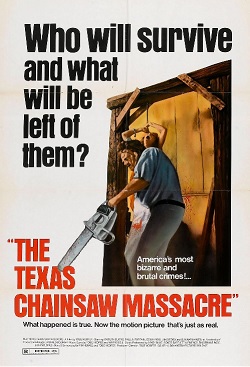
- The dad and his hitchhiker son, with lines like 'come here, you nap-haired idiot'; the fear of picking up the wrong hitchhiker; and the poster.
- They had only one chainsaw and one Leatherface outfit for the whole movie, there are 868 edits in an 83-minute movie, and the film inspired Ridley Scott to make Alien.
- It was hugely influential, loved by Scorsese, Spielberg, Tarantino and Friedkin; Daniel Pearl's cinematography is called easily the best aspect, a precursor to Paris, Texas vistas mixed with handheld documentary style, looking far better than the shoestring budget allows.
- Marilyn Burns' screaming, the trope of the person you think will help turning on you, and the masks: Gunnar Hansen described a killing mask, an old lady mask and a pretty woman mask, the last worn at dinner with a wig and black suit because in Texas you dress up for dinner.
- The film is a rich text, with countless books and analysis from gender studies to anthropology about its relevance to Texas and American history in the Nixon era; the best horror says something about its time.