Something’s Gotta Give is suggested but argued against after a recent back-to-back viewing; Kramer vs. Kramer offers a contrasting divorce double bill.
Julie & Julia pairs same-year Streep, Ephron and Meyers.
Irreconcilable Differences is suggested despite being difficult to find.
The movie improves on revisiting; few later rom-coms match it, and food-centered interactions communicate the relationships.
Jake’s indulgence and entitlement toward Jane’s food contrasts with Adam’s behavior; family leftovers, dinner parties and baking make it a great food movie without food as the plot.
Why does water-phobic, traumatized Brody remain a beach cop rather than move or capitalize on his shark-killing fame? Corruption is floated jokingly, not asserted.
Did Len bankroll the mayor’s campaign? Who competed against Tina for Miss Amity, and how did that pageant operate?
Who came second to Brody for Man of the Year, and why did a national hero receive only a small plaque?
Brody’s extraordinary shark-kill story lacks photographs, prompting playful unreliable-narrator and fever-dream theories; the shark’s disappearance is a counterargument.
Why do shark movies work so reliably, and how quickly would Amity residents return to the water? Vulnerability in water and optimism about personal risk are offered.
A Quint/USS Indianapolis prequel and an anthology of shark attacks are preferred franchise possibilities; Spielberg might have been more interested than in another Brody encounter.
The Indianapolis prequel is endorsed again; credit for the first film’s speech and proposed prequel screenplay remains disputed among Sackler, Milius and Gottlieb.
Hypothetical extravagant modern casting, jellyfish hazards inspired by an uncle’s service story, and an Oppenheimer-to-Indianapolis connection extend the prequel pitch.
John D. Hancock’s abandoned darker version, action difficulties and possible reduction of Ellen’s role are discussed as competing explanations for dismissal. A proposed Alves/Fields replacement reportedly met a DGA obstacle, treated skeptically.
Reported $20 million budget, $208 million gross and seventh-place 1978 finish.
Florida locations include Hog’s Breath Saloon and Navarre Beach.
The Sean performer reportedly recalled actual hammerheads approaching during filming; the Brody porch planter reused an original-film yellow barrel.
The fiberglass cable-junction set was slippery and nearly floated away.
Numerous sea-monster imitators and a Jaws 2 Topps trading-card set are discussed.
The original mechanical sharks had deteriorated; the new burned shark looks better but reportedly still malfunctioned.
The making-of producers’ account of Hancock’s departure is criticized as evasive.
No written score is supplied; an alleged refusal to review and television dismissal as “pure trash” are discussed with uncertainty about whether refusal is accurate.
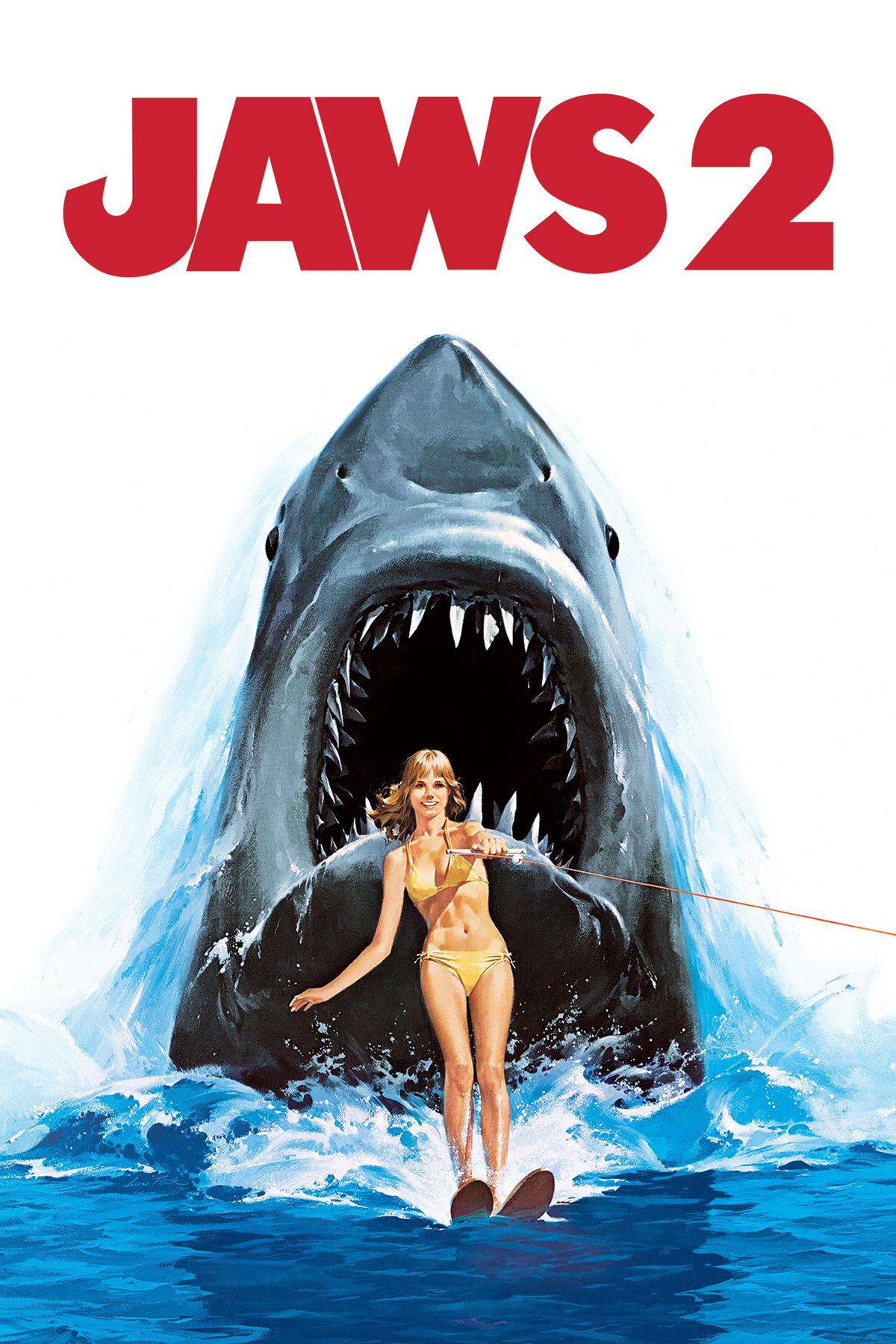
Happy sailing introductions and the prolonged water-skier attack; the latter reportedly gave the replacement director a self-contained sequence while the script was rewritten.
The driver’s accidental gasoline self-immolation is one explicit favorite, with disbelief about her plan.
Brody shoots at bluefish near a child, then argues over the shark photograph; the town council has legitimate grounds to question him.
Eddie’s death and the breaking boat edge are praised; the performer reportedly needed hurried swimming lessons.
The first large sailboat attack, Mike’s injury, helicopter destruction and Marge’s death are praised.
Marge’s rescue attempt is defended as altruistic against an argument that jumping toward the shark is foolish; responsibility shifts toward the Brody parents.
The electric-cable climax is inventive despite doubtful science; the earlier dredging cable and shark-sound explanation provide setup.
Final preferences split among Eddie’s death, the self-immolation and the helicopter; the whole doomed sailing trip is a broad fallback.
Displaying discussions 2125 - 2136 of 6801 in total