
‹ All movies
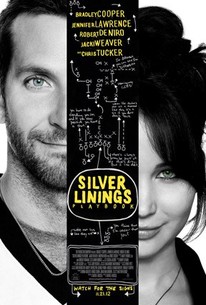
Silver Linings Playbook poster

Silver Linings Playbook

122 minutes

Cast

Selected cast credits · Film reference

Robert De Niro Pat Sr.
Jacki Weaver Dolores
Chris Tucker Danny
Anupam Kher Dr. Cliff Patel
Julia Stiles Veronica
John Ortiz Ronnie
Dash Mihok Officer Keogh
Paul Herman Randy
Matthew Russell Ricky D’Angelo
Cheryl Williams Tiffany’s Mother
Patrick F. McDade Tiffany’s Father
Brea Bee Nikki

Silver Linings Playbook | The Rewatchables

Explore episodeClose episode

Producer credits not yet identified.

Most Rewatchable Scene

Tiffany explains the sports superstition

In the discussion (11)
Approx. transcript time · 00:35:44Read transcript
  • The dinner introducing Ronnie, Veronica and Tiffany is a scene candidate: commercial-property anxiety, Metallica for the baby, mortuary humor and painfully candid flirting establish its tone.
  • Pat throwing A Farewell to Arms out the window is another scene candidate, with his relationship to literature singled out.
  • The wedding-video search and fight with Pat’s father is proposed but another participant does not find it rewatchable; the first diner date ranks highly.
  • Tiffany repeatedly appearing on Pat’s running route provides physical screwball comedy; his frightening proximity to a former colleague shows the darker side of the same staging.
  • The dance-studio encounter, explanation of Tommy’s death and training montage with Dylan and Cash’s Girl from the North Country are scene candidates.
  • The Giants tailgate with Dr. Patel and Jake is loved despite its dark turn; Cooper’s bird gesture is a highlight.
  • John Ortiz’s convincing Eagles fandom as Ronnie is praised despite being a New Yorker; Pat’s attempt to avoid fighting leads into his father’s meltdown.
  • Tiffany rebutting Pat Senior’s superstition with winning Eagles and Phillies scores is a beloved scene, even if its appeal to Philadelphia fans could count as pandering.
  • The superstition speech is an explicit scene preference: Lawrence takes control of a noisy ensemble scene, capped by opening a beer.
  • The dance contest and final romantic letter are other scene candidates; their modest required score and disastrous finishing lift add comedy, while Tiffany’s knowledge of the competition is debated.
  • Tiffany explaining superstition is the final most-rewatchable-scene choice.
In the discussion (6)
Approx. transcript time · 00:36:40Read transcript
  • Russell receives Apex Mountain support: this uniquely personal mix of local detail, wild energy and romantic resolution reached an audience in a way his later work did not.
  • Lawrence receives clear Apex Mountain support for the Oscar win and The Hunger Games in the same year; House at the End of the Street is a minor blemish.
  • Cooper receives an affirmative Apex Mountain choice as his vulnerable acting breakthrough, while American Sniper, A Star Is Born and his later directing ambitions complicate the comparison.
  • Sports fandom in movies receives Apex Mountain support, with Fever Pitch as comparison; Upper Darby on film is also proposed.
  • iPods receive an early Apex Mountain proposal, immediately deferred.
  • Cooper’s reaction to Tiffany’s account of losing her job is later jokingly called his Apex Mountain.

What’s Aged the Best?

Lawrence and Cooper; Philadelphia sports anguish; seasonal setting; iPods; family and neighborhood detail

In the discussion (12)
Approx. transcript time · 00:47:50Read transcript
  • The sports-season structure ages well, especially the chaotic 2008 Eagles season, playoff contingencies and DeSean Jackson’s premature celebration as a metaphor for self-sabotage.
  • The Sweet Forever is another example of using a sports season as narrative backdrop, with its crime story following Len Bias’s final Maryland season.
  • Philadelphia sports anguish remains current, and the film’s blind optimism is jokingly compared with the Eagles’ current coaching mindset.
  • Lawrence and Cooper’s raw performances before their stardom solidified age especially well; Lawrence’s later choices are contrasted with this breakout energy.
  • The Halloween-to-Christmas setting makes this an unexpectedly strong holiday movie, with seasonal weather and decorations contributing.
  • Standalone iPods and casually exploring a friend’s music collection feel appealingly quaint.
  • The strong 2012 film year is raised, including Flight, Argo, The Master, Django and Lincoln.
  • Reading and talking about the Eagles as father-son connection ages well; the panel recalls sports-page etiquette and receiving box scores in summer-camp mail.
  • The question of what the family watches leads to joking memories of arguments over newspaper film reviews.
  • Shea Whigham’s brother Jake ages well: his tearful attempt to connect through insensitive comparisons and loyalty at the game; tax or real-estate law is conjectured from his advice to his father.
  • The neighbor filming Pat’s breakdown anticipates everyday recording of disturbances, though the subplot lacks closure; the crowded neighborhood’s instant awareness feels lived-in.
  • Final aged-best preferences are Philadelphia sports anguish and Jennifer Lawrence.
In the discussion (2)
Approx. transcript time · 01:11:31Read transcript
  • Chris Tucker’s Danny is proposed as weak link because his friend role overlaps Ronnie’s and his trips from Baltimore strain plausibility, not because of the performance.
  • Others defend Tucker’s wounded, off-kilter performance, the destabilizing humor of his visits and his jailhouse-lawyer exchange with De Niro; a hoped-for dramatic lead career did not follow.

What’s Aged the Worst?

Mental-health depiction; age gap; Russell’s reputation; late Reid years; parlay explanation disputed

In the discussion (7)
Approx. transcript time · 01:14:11Read transcript
  • The depiction of mental health and the leads’ age gap are aged-worst candidates; the film leaves Pat’s medication adherence less explicit than it could, although a later line indicates he is taking it.
  • The suggestion of special perception through mental illness raises concerns, while the parents’ fear and desire to help feel truthful; the romantic fantasy and reported personal investment of the filmmakers complicate the criticism.
  • Russell’s reputation and reported treatment of actors are aged-worst concerns; Zach recalls Bale confirming intervention during American Hustle and mentions other publicly reported confrontations. Zach Baron
  • The panel argues for interpreting the film as a personally meaningful romantic fantasy rather than requiring it to represent every experience of mental illness.
  • Memories of Andy Reid’s late Eagles years and the contrast with his later Chiefs offense are another aged-worst choice.
  • Explaining a parlay seems dated given gambling’s increased familiarity, though another participant appreciates the explanation.
  • The near-erasure of the Phillies championship is recalled as an aged-worst issue and deferred to nitpicks.

The Stephen A. Smith Hottest Take Award

Garbage bag; Weaver casting; De Niro nomination; Randy; Tiffany’s manipulation; accents

In the discussion (6)
Approx. transcript time · 01:22:28Read transcript
  • The garbage bag is disliked as another embarrassing Philadelphia image and its usefulness is questioned; a pickle-juice alternative is joked about.
  • Jacki Weaver is called good in the role but questionable casting because the mother could have supplied a convincing Philadelphia accent; Melissa Leo is proposed instead.
  • De Niro’s Oscar nomination and comeback narrative are questioned even while his performance and renewed engagement are appreciated.
  • Randy’s behavior is considered implausibly tolerated: a Cowboys fan flirting with Pat Senior’s wife and threatening the family’s livelihood would face confrontation.
  • Tiffany is provocatively compared to the Joker for manipulating Pat through the forged letter and promise of his estranged wife’s presence.
  • The characters feel psychologically Philadelphian without sounding local; avoiding accents has defenders, while a genuinely local actress is imagined and Nikki’s actor is identified as being from Philadelphia.

Sequel, Prequel, Limited Series, or All-Black Remake

Untouchable; parents’ courtship prequel proposed

In the discussion (1)
Approx. transcript time · 01:44:01Read transcript
  • The film is called untouchable; a parents’ courtship prequel is imagined but a sequel is rejected, with later Eagles turmoil joked about as a sequel already happening.

The Coach Finstock Award for Best Life Lesson

Stand up for your brother; bonding through a fight

In the discussion (1)
Approx. transcript time · 01:49:11Read transcript
  • Life-lesson suggestions are playing Ride the Lightning for a baby, bonding through drinking and fighting, and always defending a brother; the first suggestion draws doubt.