‹ All movies
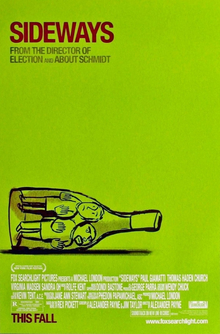
Sideways poster

Sideways

127 minutes

Cast

Selected cast credits · Film reference

Paul Giamatti Miles Raymond
Virginia Madsen Maya Randall
Sandra Oh Stephanie
Marylouise Burke Mrs. Raymond
Jessica Hecht Victoria Cortland
Lee Brooks Ken Cortland
Missy Doty Cammi
M.C. Gainey Cammi's husband
Alysia Reiner Christine Erganian
Shake Tukhmanyan Mrs. Erganian
Shaun Duke Mike Erganian
Stephanie Faracy Stephanie's mother
Patrick Gallagher Gary the Bartender
Joe Marinelli Frass Canyon Pourer

Sideways | The Rewatchables

Explore episodeClose episode

Half-Assed Internet Research

Wine-industry impact; novel adaptation; filming mishaps; wine/restaurant choices; sequel changes

In the discussion (18)
Approx. transcript time · 00:16:23Read transcript
  • The film reportedly hurt Merlot’s reputation and increased Pinot demand.
  • Overproduction responding to Pinot demand reportedly diluted quality, while Merlot later recovered somewhat.
  • Swingers' effect on dancing and Vegas, and American Gigolo's influence on style, are comparisons for Sideways reshaping a regional wine economy; later visits found Pinot dominant everywhere.
  • The film's specific wine choices are praised as accurate. A family anecdote describes freeze-framing Sea Smoke, joining its mailing list before access closed, and receiving cases annually.
  • Rex Pickett's repeatedly rejected novel reportedly reached producer Michael London and Payne before publication; the film's development helped the book reach print shortly before release.
  • The Hitching Post reportedly became hard to enter after the film. Its owner said at the tenth-anniversary event that wine sales doubled, restaurant revenue quadrupled and the business could buy air conditioning.
  • Some dinner dialogue reportedly was improvised, while the performers drank grape juice rather than wine and became sick of it.
  • The dinner wines are enumerated as Whitcraft2001 Pinot Noir, Sea Smoke2001 (cuvée transcribed Botella), Kistler Pinot Noir and a final premier-cru name transcribed Pallard/Pollard; uncertain labels remain unresolved. A mother declined an invitation to discuss the wines on the podcast.
  • Pickett reportedly urged that Maya respond rather than merely listen; Payne's third draft supplied her powerful speech.
  • Giamatti reportedly knew nothing about wine and faked that expertise.
  • Church had largely left acting for voiceover work before Payne cast him, having considered him for About Schmidt.
  • The wallet-retrieval house reportedly had been a meth lab shortly before filming and was left intact.
  • The food served at the mother’s house reportedly caused food poisoning.
  • Fake wine reportedly made the cast sick, requiring real wine instead.
  • A proposed short podcast would investigate fake drinks, drugs and food on film sets, prompted by the fake-wine story and comparisons with prop cocaine and cigarettes.
  • Producers initially wanted Petrus for the prized bottle, but its owner's refusal led to Cheval Blanc.
  • Restaurant locations are enumerated: Solvang Restaurant for breakfast, Los Olivos Cafe for the group dinner, A.J. Spurs for Cammy's dinner, and the Hitching Post.
  • Pickett reportedly disliked Oh's changes from Terra to Stephanie, including the motorcycle and biracial child; in retaliation his Vertical sequel describes the character as a Reno prostitute, considered mean-spirited.

Casting What-Ifs

George Clooney; Robert Downey Jr.

This discussion recalls a choice from an earlier episode.

In the discussion (6)
Approx. transcript time · 00:23:01Read transcript
  • Clooney reportedly wanted the film while at peak stardom, but Payne declined and later cast him in The Descendants.
  • Whether Clooney wanted Miles or Jack is disputed; one participant accepts Jack but not Miles.
  • Clooney as Jack could have played against his image and echoed his earlier television career.
  • Clooney’s star wattage could distract from the ordinary specificity that Church’s career gives Jack.
  • Downey reportedly read for Miles, though how close he came is unclear.
  • Downey might capture the addiction but his energy could undermine the depression; his Zodiac journalist is a proposed model.

Roger Ebert's review

Rating not yet verified
In the discussion (1)
Approx. transcript time · 00:34:58Read transcript
  • Ebert loved the film, calling it the year's best human comedy and praising casting that becomes impossible to replace; no numeric star score is spoken.

Most Rewatchable Scene

Miles and Maya’s porch conversation

In the discussion (18)
Approx. transcript time · 00:36:28Read transcript
  • The first Hitching Post visit is a scene candidate: Maya's interest meets Miles's negative assumption that she only wants tips, while Jack encourages him and her American Spirits entrance is admired.
  • The split-screen tasting leading to Stephanie is a scene candidate, especially her openly flirtatious spanking exchange with Jack and his immediate recognition of their chemistry.
  • The Los Olivos dinner is a scene candidate, beginning with Miles’s refusal to drink Merlot.
  • The dinner's phone-call sequence is admired as a cringe-inducing breakdown: ringing is heard before Miles calls his ex, like the inevitable disastrous calls in Swingers. Drinking is likened to pulling a grenade pin.
  • The kitchen/porch conversation is immediately called the scene to beat.
  • Richebourg,1988 Sassicaia, Andrew Murray and1961 Cheval Blanc are admired wine-name drops during the visit.
  • Miles’s incoherent description of his enormous novel is a comic highlight.
  • Miles's Pinot monologue is admired as an exceptional script passage, despite Payne reportedly downplaying its greatness.
  • Maya’s speech about wine’s evolving life and inevitable decline earns equal praise.
  • The performances keep the conspicuously written speeches natural; Miles visibly falls in love before ruining the opportunity.
  • The porch receives an explicit final scene choice.
  • The spit-bucket and beach sequence is another scene candidate.
  • Recovering the wallet is a comic scene candidate, admired for coexisting with the porch’s very different tone.
  • Gainey's uninhibited nude chase is admired as an outrageous comic performance; the couple's excitement at being caught adds to the joke.
  • The ambiguous ending and voicemail unlock Miles’s painful history.
  • Drinking prized wine with fast food gives Miles one good thing without a tidy self-improvement makeover.
  • The porch is confirmed as the scene winner.
  • The wedding encounter with the pregnant ex-wife is an additional admired scene, with Giamatti barely containing a breakdown and again deserving Oscar recognition.

Recasting Couch

Downey as Miles; Connelly as Maya (qualified)

In the discussion (2)
Approx. transcript time · 00:37:58Read transcript
  • Madsen's beauty, age and underfulfilled earlier stardom mirror Maya's situation; Connelly is a plausible alternative but may look too impossibly polished, while Griffith is rejected as a fit.
  • Downey as Miles is reconsidered for recasting couch because his residual charm might change the character, though admiration for Giamatti remains.

What’s Aged the Best?

Church’s Jack; wine culture; regional setting; opening credits; dark comic details

In the discussion (11)
Approx. transcript time · 00:53:54Read transcript
  • Church's Jack is an aged-best portrait of a recognizably indiscriminate womanizer, compared with a reported Warren Beatty because-you-never-know anecdote; the conduct is also flagged for aged-worst discussion.
  • Jack suggesting a wine-store career to Miles is funny because the nearby clerk already works there; the film's dated genital euphemisms are also enjoyed.
  • Sex is presented as primal and unglamorous rather than erotic, both with Stephanie and with Cammy's husband.
  • The two printer boxes and underestimating Stephanie are comic details.
  • The fragmented opening credits chart Miles’s delayed departure.
  • Stealing money beside family photographs is an admired dark detail, despite reservations about the mother’s-house scene.
  • The family photograph reportedly shows Giamatti’s real father, Bart, the baseball commissioner.
  • Jack’s wide-open-place enthusiasm is another comic aged-best detail.
  • Walking the highway to dinner is a recognizable local detail.
  • Miles devouring farmers-market popcorn is funny but briefly makes Maya’s attraction harder to understand.
  • Wine culture and the Santa Ynez region are aged-best choices, including its accessibility from Los Angeles.

The Den of Thieves Benihana Award for Scene-Stealing Location

Barrel-filled winery; picnic sites; Santa Ynez region

In the discussion (3)
Approx. transcript time · 00:58:44Read transcript
  • The barrel-filled winery is a location choice.
  • The outdoor picnic sites are another location choice.
  • The region generally inspires visits; Frass Canyon is identified as Fess Parker’s winery.
In the discussion (3)
Approx. transcript time · 01:00:30Read transcript
  • The fake car accident is the weak-link choice.
  • The concrete-block crash and still-drivable car are reiterated as the weak link, with no character considered weak.
  • Jack marrying into a wealthy Armenian family seems implausible to one voice, but his looks, acting identity and charm are a defense; a personal anecdote concerns an Armenian father recognizing a young suitor's immaturity.

What’s Aged the Worst?

2004 phones; Jack’s behavior; drunk driving

In the discussion (4)
Approx. transcript time · 01:02:42Read transcript
  • The 2004 cellphones are an aged-worst choice, recalling a time they were mainly for emergencies.
  • The golf scene's only failing is that it is too short; a fuller hot take is deferred.
  • Jack's behavior would be received less sympathetically now, but the film needs his flaws and womanizing to generate the story; greater modern caution about flawed characters is criticized.
  • Unacknowledged drunk driving is an aged-worst issue, contrasted with the region's later driver services; the plan to be nearer the hotel when drunk still involves driving.

The Stephen A. Smith Hottest Take Award

Golf movie with wine; great directors should work more often

In the discussion (5)
Approx. transcript time · 01:08:05Read transcript
  • Sideways is a golf movie with wine: Miles’s clothes, Jack’s clubs and golf on television support the argument. — Chris Ryan
  • Payne's best film is debated among Sideways, Election and The Descendants. Election's cruelty divides the speakers, while Payne's later emotional warmth is admired; Clooney's Up in the Air, Descendants and Michael Clayton period is praised.
  • Great directors should work more often, with Payne and Field singled out for long gaps.
  • A Knausgård adaptation with Mikkelsen reportedly collapsed just before production; a Dorian Gray project is another unrealized Payne film.
  • Comparing Payne with the Knicks failing to acquire stars is rejected because Payne already made Sideways and won two screenplay Oscars.

Picking Nits

Giamatti’s golf; wine chug; wedding disclosure; friendship; naked run; Saab survival

In the discussion (6)
Approx. transcript time · 01:08:33Read transcript
  • Giamatti’s golf swing is unconvincing; basic coaching could have improved it.
  • Chugging a whole wine bottle in forty-five seconds and sleeping it off is questioned, with severe alcoholism offered as the explanation.
  • Miles revealing the wedding to Maya, then lying about it, seems either implausibly careless or intentional sabotage; Jack failing to trace the betrayal remains unresolved, and disliking his conduct does not erase the friendship breach.
  • Their enduring friendship is questioned: freshman-year acquaintance alone seems inadequate, though Jack knowing Victoria suggests later contact. A current college-roommate comparison highlights the gap between friendship and being the sole bachelor-party guest.
  • Jack's long naked run between towns is questioned; stealing pants from a house is a proposed alternative met with disbelief, and the distance in kilometers is clarified.
  • The damaged Saab surviving the return journey is the biggest vehicle nitpick, compounded by the speaker's dislike of its reliability and slow parts supply.

Apex Mountain

Santa Ynez; Virginia Madsen; Saab Turbo; car champagne; Payne/Oh marriage; Pinot Noir; Barely Legal

In the discussion (15)
Approx. transcript time · 01:24:32Read transcript
  • Giamatti's Apex is placed in the John Adams/Billions period rather than Sideways, with the mid-2010s suggested.
  • Church's Apex remains discussed rather than clearly resolved: Wings, the Oscar nomination, Spider-Man, steady later work and an Emmy for Broken Trail are considered; an older-character-actor career like Dern's is desired.
  • Santa Ynez, including Los Olivos and Solvang, receives an affirmative Apex choice because the film boosted the region.
  • Bachelor-party disasters lose Apex to The Hangover, with Bachelor Party and Very Bad Things alternatives.
  • Madsen is initially favored for Apex on the Oscar nomination and iconic scene, with her earlier Hot Spot and Candyman career considered.
  • The Saab Turbo receives an affirmative Apex choice despite being disliked.
  • Drinking champagne in a car receives an affirmative choice, apparently the only example remembered.
  • Oh is rejected for Apex here; Grey's Anatomy and Killing Eve's first season are competing peaks, while The Chair receives praise and Arliss is rejected.
  • The Payne/Oh marriage receives an affirmative Apex choice before its later breakup.
  • Pinot Noir receives an affirmative Apex choice because the film reinvigorated it.
  • Angry naked men are proposed but initially rejected without a settled alternative; Eyes Wide Shut is floated but its nudity may reflect passion rather than anger.
  • Golfer James Lepp receives a joking Apex mention.
  • Richebourg receives a qualified Apex mention for its name-drop.
  • Barely Legal magazine receives an affirmative choice for its most memorable movie moment.
  • Madsen receives a clear affirmative Apex choice after consideration of her earlier films.

Hall of Fame Plaque

Payne: Sideways or Election

In the discussion (1)
Approx. transcript time · 01:29:58Read transcript
  • The optional Hall of Fame plaque for Payne splits Sideways against Election; Sideways is defended for its commercial success, screenplay Oscar and wine-industry impact.

Best Race Horse Name from This Movie

Smooched Bone; Johnson Crank; Back of an L.A. School Bus

In the discussion (3)
Approx. transcript time · 01:30:18Read transcript
  • Smooched Bone is a racehorse-name candidate.
  • Johnson Crank is another racehorse-name candidate.
  • Back of an L.A. School Bus is another racehorse-name candidate.

Sequel, Prequel, Limited Series, or All-Black Remake

Vertical/Chile sequels; six-to-eight-episode series

In the discussion (2)
Approx. transcript time · 01:34:45Read transcript
  • Pickett's Vertical sequel follows the men and Miles's mother toward Oregon; another book goes to Chile. Payne's refusal to make sequels is noted, while new destinations become jokes.
  • A modern adaptation is imagined as a six-to-eight-episode HBO series, perhaps one episode per day, while the existing week-long structure is considered naturally episodic.

Is This Movie Better With…?

Wayne Jenkins in several roles

In the discussion (1)
Approx. transcript time · 01:35:42Read transcript
  • Wayne Jenkins is imagined as Gainey's character, Miles, Jack, the tasting-room server or a third companion reacting to the wine descriptions; the different role assumptions are part of the joke.

Just One Oscar

Payne and Taylor’s screenplay

In the discussion (1)
Approx. transcript time · 01:37:05Read transcript
  • The hypothetical Oscar goes to Payne/Taylor's screenplay by two choices against one for Giamatti.

Probably Unanswerable Questions

Jack and Miles’s friendship; Miles’s sexual and teaching abilities

In the discussion (2)
Approx. transcript time · 01:37:16Read transcript
  • Unanswerable questions revisit why Jack and Miles like each other or stayed in touch, compared with the better-explained actor friendship in Swingers.
  • Questions ask whether Miles's drinking made him a poor sexual partner and whether he should teach eighth-grade English; his final classroom scene is defended as competent teaching.

What Piece of Memorabilia Would You Want From This Movie?

Dinner wine bottles; 1961 Cheval Blanc; Jack’s golf clubs

In the discussion (4)
Approx. transcript time · 01:41:33Read transcript
  • Sea Smoke or the preserved dinner wine bottles are memorabilia choices.
  • The1961 Cheval Blanc is another choice, though described as undrinkable now.
  • Jack’s new golf clubs are another choice.
  • The Saab is rejected as memorabilia.

The Coach Finstock Award for Best Life Lesson

Avoid alcoholism; avoid an 800-page first novel

In the discussion (2)
Approx. transcript time · 01:42:26Read transcript
  • Avoid alcoholism is a life lesson.
  • Avoid an800-page first novel is another lesson, followed by the suggestion not to write one at all.

Who Won the Movie?

Paul Giamatti (two choices); Alexander Payne (one choice)

In the discussion (4)
Approx. transcript time · 01:42:43Read transcript
  • Giamatti is selected because the film made him a viable movie star rather than a supporting actor.
  • A second explicit Giamatti choice emphasizes the leading career this film enabled.
  • A stray M.C. Gainey interjection interrupts the Giamatti discussion; it is not treated as an unambiguous final ballot.
  • Payne is the competing winner because Sideways made him a must-see director and gave his filmography an enduring commercial success; earlier acclaim did not guarantee that leap.
Podcast choices

Producer review

Enjoyed; expects richer and funnier rewatches

In the discussion (2)
Approx. transcript time · 01:46:26Read transcript
  • Enjoyed the film but expects better rewatches after initial uncertainty about rooting for Miles and fear he might die by suicide. — Craig Horlbeck
  • The subsequent exchange considers how age and knowing the hopeful ending can make rewatches richer and funnier; the film avoids a tidy makeover. Individual speaker turns remain unresolved.

More from the conversation

Opening introductions identify Sean Fennessey and Chris Ryan alongside Bill Simmons.
Approx. transcript time · 00:01:35Read transcript
One-Word Movie Month is explicitly current; the theme arose because Cliffhanger, Sideways and the planned next film all have one-word titles.
Approx. transcript time · 00:02:19Read transcript
Sideways resembles a spiritual sequel to Swingers: a sympathetic loser with a glimmer of hope. Midnight Cowboy, Fredo and Murray's What About Bob? and Stripes characters are comparisons, though Miles communicates unusual anger and sadness.
Approx. transcript time · 00:03:28Read transcript
Miles's wine expertise gives him one exceptional competence amid broader failure; this is jokingly compared with specialist podcasting.
Approx. transcript time · 00:05:05Read transcript
The film is prized as a twenty-first-century drama and comedy about male friendship at a crossroads. Its precise West Coast details become universal with age, while Payne's seventies influences invite Last Detail and Hal Ashby comparisons.
Approx. transcript time · 00:05:33Read transcript
Payne's seven-year gap after Sideways is attributed to paid screenplay work, divorce from Sandra Oh and prolonged development of Downsizing; his small filmography commands broad directorial respect.
Approx. transcript time · 00:07:10Read transcript
Sideways adds sentiment and hope to the biting satire of Payne's first three films. His stated aim to draw from life rather than other movies is considered self-aggrandizing but persuasive in the recognizable characters.
Approx. transcript time · 00:08:43Read transcript
Aging into the protagonists' stage of life changes the film's resonance: missed opportunities contrast with Jack landing on his feet, while Miles reacts badly to reality and melts down over wedding news.
Approx. transcript time · 00:09:40Read transcript
The film discourages one viewer from attempting a novel, favoring attainable work over an ambition that may exceed one's abilities; the beach conversation's unnecessary feeling and half-life complaint reinforce the warning.
Approx. transcript time · 00:11:21Read transcript
The beach despair recalls fears of reaching forty without career success; Miles should move to Los Alivos and work with wine rather than miscast himself as a novelist.
Approx. transcript time · 00:12:32Read transcript
The final voicemail reveals the autobiographical pain behind Miles's novel, even though its huge length and non-ending sound unreadable; handing over two printer boxes is a subtle joke.
Approx. transcript time · 00:13:41Read transcript
Miles could succeed as a wine writer or podcaster with Jack as comic sidekick, but his snobbery would make retail difficult. A successful podcast is imagined as a Sideways sequel.
Approx. transcript time · 00:14:50Read transcript
Wine rankings are imagined as a podcast segment; personal palate decline is blamed conversationally on coffee, smoking and age, while Miles's ability to identify aromas is admired.
Approx. transcript time · 00:18:59Read transcript
Casting Giamatti as a lead feels like discovering a real person, despite his established character-actor work and American Splendor lead; the acclaimed script also attracted Clooney.
Approx. transcript time · 00:21:29Read transcript
The 2004 Oscars are criticized: Million Dollar Baby took picture, director, actress and supporting actor; Blanchett won for her Hepburn portrayal in The Aviator and Foxx for Ray. Freeman's award is interpreted as career recognition.
Approx. transcript time · 00:27:24Read transcript
Collateral, Man on Fire, Before Sunset and Eternal Sunshine are neglected favorites; the claim that Eternal Sunshine was shut out is corrected because it won original screenplay, though it missed picture.
Approx. transcript time · 00:28:40Read transcript
The year's popular films are enumerated as Bourne Supremacy, Anchorman, Kill Bill Volume2, Garden State, The Notebook, Mean Girls, Napoleon Dynamite, Saw, Dodgeball,50 First Dates, Passion of the Christ, Friday Night Lights, Ocean's12, The Grudge,13 Going on30, Meet the Fockers and Along Came Polly. Fahrenheit9/11 and Passion are singled out as major cultural events.
Approx. transcript time · 00:28:55Read transcript
All five picture nominees are Million Dollar Baby, The Aviator, Finding Neverland, Ray and Sideways. Vera Drake's director nomination prompts clarification that its illegal-abortion story is a dark drama, followed by hypothetical Mike Leigh podcast jokes.
Approx. transcript time · 00:29:47Read transcript
Madsen is preferred to Blanchett for supporting actress, and Giamatti's missing nomination is considered outrageous. All actor nominees are Cheadle for Hotel Rwanda, Depp for Finding Neverland, DiCaprio for The Aviator, Eastwood for Million Dollar Baby and Foxx for Ray.
Approx. transcript time · 00:30:52Read transcript
Finding Neverland's nominations are attributed to a strong Miramax campaign; Million Dollar Baby's late release and devastating ending disrupted precursor results that favored Sideways and Giamatti. Its emotional impact is acknowledged even by those who disliked its manipulation.
Approx. transcript time · 00:31:31Read transcript
Sideways won adapted screenplay but lost its picture, director, supporting actor and supporting actress nominations; its broad critics' screenplay sweep and modest-budget financial success suggest a disappearing film era.
Approx. transcript time · 00:32:49Read transcript
A best-picture redo yields disagreement: Kill Bill Volume2 is one personal favorite but considered electorally impossible, while The Aviator seems the more surprising Oscar loss.
Approx. transcript time · 00:33:19Read transcript
Cruise's missing Collateral nomination is regretted; Mann is considered a stronger directing choice than Hackford for Ray, despite affection for Hackford. Collateral receives emphatic praise.
Approx. transcript time · 00:34:10Read transcript
Payne's casting gift is illustrated by Hong Chau and Bruce Dern; an alternate Downsizing cast with Witherspoon and an unremembered male lead is discussed without a settled identity.
Approx. transcript time · 00:35:45Read transcript
The split screens are interpreted as an Ashby homage; jazzy montages make brief happiness feel intoxicating before abrupt comedowns. Amy Scott's Ashby documentary is recommended.
Approx. transcript time · 00:41:04Read transcript
Craig confirms visiting with Liz Kelly; a wine/basketball analogy compares underrated Syrah with Shai Gilgeous-Alexander, turning into a joke about Seattle's relocated team.
Approx. transcript time · 00:59:13Read transcript
Downey's difficult pre-comeback period and later Marvel dominance prompt wishes for smaller dramas and a collaboration with Anderson; his unusual career trajectory is admired.
Approx. transcript time · 01:13:42Read transcript
The region's relaxed life and residents' shared wine passion inspire a hypothetical Rewatchables winery, with The Action Is the Juice and Sizemore blend among jokes.
Approx. transcript time · 01:21:07Read transcript
A Michael Madsen sighting prompts debate about a fan greeting and praise for Species, whose cast is enumerated as Natasha Henstridge, Ben Kingsley, Forest Whitaker, Michael Madsen and Marg Helgenberger; Species and Blackhat are floated for one-word coverage.
Approx. transcript time · 01:22:27Read transcript
A tangent recalls Berg sharing a home with Emanuel and Maron, with joking speculation about Maron being cut out of later partnerships.
Approx. transcript time · 01:26:24Read transcript
A joking Chaplin remake would cast Craig to test his earlier claim that anyone can act, financed by selling wine.
Approx. transcript time · 01:33:03Read transcript
A Castle Rock tangent praises its taste and steady output, citing successes including When Harry Met Sally, Shawshank, Dolores Claiborne and The American President, against failures such as Year of the Comet, Mr. Saturday Night and North. A24 is a modern comparison.
Approx. transcript time · 01:38:45Read transcript
Jack and Christine's house is reportedly across from Ron Goldman's former home.
Approx. transcript time · 01:42:11Read transcript
Craig Coralbeck is introduced with a joking comparison to Andy Richter in a review of The Town.
Approx. transcript time · 01:45:39Read transcript
Southern California travel times and geography are praised as accurate; the closing confirms continued One-Word Movie Month.
Approx. transcript time · 01:48:54Read transcript