‹ All movies
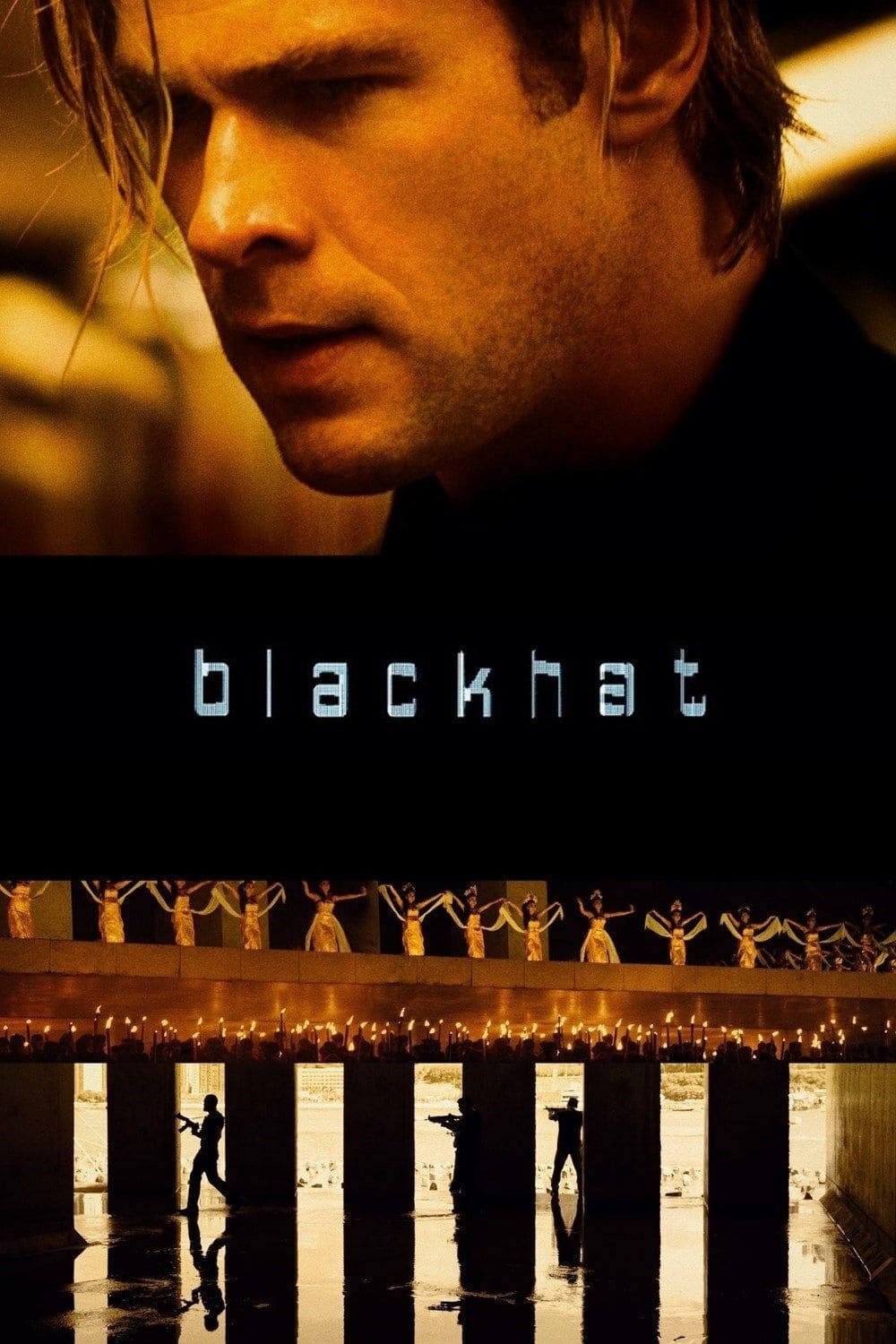
Blackhat poster

Blackhat

133 minutes

Cast

Selected cast credits · Film reference

Chris Hemsworth Nick Hathaway
Viola Davis Carol Barrett
Wei Tang Chen Lien
Leehom Wang Chen Dawai
Ritchie Coster Elias Kassar
Holt McCallany Mark Jessup

Blackhat | The Rewatchables

Explore episodeClose episode

Producer credits not yet identified.

Is There a Better Title for This Movie?

Cyber; Handsome Hacker; Ghostman, qualified

In the discussion (3)
Approx. transcript time · 00:14:46Read transcript
  • “Handsome Hacker” is proposed as a more commercially inviting title.
  • The original title Cyber might have communicated the premise more clearly.
  • Handsome Hacker is reiterated; Ghostman is another possibility but risks sounding like a horror movie.

Half-Assed Internet Research

Commercial withdrawal; rejected score; security expert endorsement

In the discussion (3)
Approx. transcript time · 00:17:44Read transcript
  • Universal reportedly withdrew the film from all but 236 theaters within two weeks, and Legendary took a $90 million write-down.
  • Harry Gregson-Williams reportedly saw the film and publicly objected that little of his score remained despite his credit; Mann defended choosing music according to his own vision.
  • A manager of Google’s information-security engineering team reportedly called it the most accurate information-security film she had seen, prompting jokes about the small field.

Roger Ebert's review

In the discussion (1)
Approx. transcript time · 00:21:38Read transcript
  • Roger Ebert had died before this film; Matt Zoller Seitz’s review on RogerEbert.com gave three and a half out of four.

Most Rewatchable Scene

Car explosion and ensuing deaths; basement raid and shootout

In the discussion (13)
Approx. transcript time · 00:23:10Read transcript
  • The opening computer-hacking graphics are praised as riveting and compared with Fight Club’s credits, while explicitly not chosen as the most rewatchable scene.
  • The negotiation over Hathaway’s release is nominated for his Chicago accent and defiant bargaining, including “This isn’t a negotiation. I just made it one.”
  • The Korean restaurant sequence is where the film takes off: Lien challenges Hathaway’s prison mindset, and his philosophy recalls Thief.
  • The restaurant fight benefits from a space sized for close combat, surveillance-camera setup, and Hathaway’s Ghostman login.
  • Finding the transmitter by moving a phone around the plants is nominated.
  • The basement raid is praised for its tunnel to the pier, hidden explosives, gunfight sound and movement; Kassar becomes a formidable threat once he moves with a gun.
  • The car explosion that kills Lien’s brother is the favored scene for one participant, intensified by the subsequent deaths of Barrett and Jessup.
  • Dropping a car from a parking garage through the server company’s roof is praised as an unusually inventive break-in.
  • The phone confrontation with the hacker is nominated for the “glorified carder” insult and Hathaway’s leverage over the stolen money.
  • The final gun-and-knife battle amid a Jakarta procession is nominated, while improvised magazine armor and oblivious bystanders strain belief.
  • The basement raid and shootout is the other final choice; Kassar’s concern for his own crew gives the villains distinctive detail.
  • Barrett and Dawai pressuring financial official Gary is an additional nomination, especially her threats to trigger an investigation and news coverage.
  • Hathaway in the reactor core is nominated for its astonishing visual setting.

Picking Nits

Unestablished fighting skills; elaborate hideout; exposed gunfighters; handsome hacker; distant dialogue; helicopter conversation; precise wound preparation; replaced dialogue

In the discussion (8)
Approx. transcript time · 00:26:36Read transcript
  • An early prison fight is proposed to establish Hathaway’s combat ability before the restaurant brawl.
  • The elaborate basement tunnel and booby traps prompt questions about who could construct them discreetly.
  • Barrett and Jessup fail to take defensive cover in the shootout.
  • Hemsworth is considered implausibly handsome for the hacker role.
  • The final confrontation’s dialogue could not plausibly be heard across a loud cultural event at such a distance.
  • The helicopter conversation about Hathaway dating Dawai’s sister, supposedly on a private channel, is criticized.
  • The couple seems prepared for the exact wounds Hathaway will receive, with supplies, scarf, and magazine armor enabling his survival.
  • Replacing dialogue across the opening 25 minutes to support the reordered plot is criticized as especially odd for a $70 million film.

What’s Aged the Best?

Expert prisoner; investigative release; hacker reversal; Davis; McCallany; city view; riverbed revelation; Kassar; Black Widow; escape warning; Dawai; helicopters; cooking shot; magazine armor

In the discussion (13)
Approx. transcript time · 00:32:40Read transcript
  • A prisoner with unparalleled specialized skills is praised as a compelling premise.
  • Releasing a criminal because only he can solve the case is another favored trope.
  • A seemingly invulnerable hacker discovering that another hacker can foil him is praised.
  • Davis’s commanding persona and confrontation with Gary are praised; she has stronger chemistry with Hemsworth than his romantic partner does.
  • McCallany’s Jessup fills the reliable, forceful supporting role associated with Sizemore, a marshal willing to bend rules.
  • The couple looking out over Los Angeles before intimacy recalls an earlier De Niro–Eady scene.
  • Hathaway assembling the clues in a dry Indonesian riverbed recalls Mann’s recurring protagonist-revelation scenes.
  • Kassar’s bald, bearded, tattooed, shirtless, smoking villain image checks every box.
  • The Black Widow name for technology and the instruction that the hero must run are favored thriller devices.
  • Dawai’s coolness, bilingual dialogue, and performance are praised.
  • The large helicopters are admired.
  • A low-angle Hong Kong cooking shot gives the film a brief travel-food-show quality.
  • Improvised magazine body armor is another affirmative choice.

The Great Shot Gordo Award for Most Cinematic Shot

Barrett’s dying view of the tower

In the discussion (3)
Approx. transcript time · 00:42:06Read transcript
  • The final fight’s crowd and colors and the distinctive opening graphics are nominated.
  • Barrett looking up toward the tower as she dies, after mentioning her husband’s death on 9/11, is the preferred shot.
  • Hathaway alone on the immense runway after release is another nomination.

What’s Aged the Worst?

Unrealism critiques; Hemsworth’s self-assessment and accent; good-man prison trope; repair-worker insult; dense plot and audio; thin final villain; Facebook grievance

In the discussion (7)
Approx. transcript time · 00:45:49Read transcript
  • Criticisms that the cyberattack premise was unrealistic are considered to have aged poorly.
  • Hemsworth’s dismissal of his own performance is rejected; his accent is criticized, and simply retaining an Australian accent is proposed.
  • The stock action-film backstory of a good man imprisoned for injuring someone while protecting another person is criticized as too convenient.
  • The film insults television and garage-door repair workers through Hathaway’s dismissive dialogue.
  • The dense plot, jumpy explanatory dialogue, and inconsistent audio mix are criticized.
  • The final hacker villain arrives too late and lacks a developed biography or convincing motive beyond money as a scoreboard.
  • Publicly venting a professional grievance on Facebook is added as an aged-worst choice.

The Neil McCauley “A Book about Metals” Award for Best Line from the Movie

“I’m not sure there’s any light at the end of this tunnel anymore”; “I do my own time, not the institution’s”; “You’re really hurting for space”

In the discussion (3)
Approx. transcript time · 00:52:27Read transcript
  • “I’m not sure there’s any light at the end of this tunnel anymore” is one choice.
  • “I do my own time, not the institution’s” is the competing choice, with its program of physical and mental discipline compared to Thief.
  • “You’re really hurting for space” to the restaurant worker is the belated quote choice.

Casting What-Ifs

None found

In the discussion (1)
Approx. transcript time · 00:53:36Read transcript
  • No casting alternatives from production research were found.

The Joey Pants “That Guy” Award

John Ortiz; William Mapother; Sadak’s actor; Coster sweep proposed

In the discussion (4)
Approx. transcript time · 00:54:01Read transcript
  • John Ortiz is nominated.
  • William Mapother is nominated; his relationship to Tom Cruise is corrected from brother to cousin.
  • The actor playing Sadak is another nomination.
  • Kassar’s performer is proposed as a potential sweep of That Guy, Overacting, and Dion Waiters.

Recasting Couch

Adam Driver as Hathaway; Jon Bernthal as the hacker villain; Hemsworth with Australian accent

In the discussion (6)
Approx. transcript time · 00:55:13Read transcript
  • DiCaprio is considered too old by 2015, while keeping Hemsworth with an Australian accent is defended.
  • Hathaway could have entered prison thin and built his physique there; the role still needs physicality.
  • Jeremy Renner around 2009 is an appealing possibility, but he might already be too old for the 2015 film.
  • Miles Teller is considered too young for a character presumed to be in his mid-thirties; Gyllenhaal is floated.
  • Adam Driver emerges as the preferred alternative because he can plausibly be both a hacker and physically formidable.
  • Jon Bernthal is proposed as the hacker villain, though the discussion acknowledges his negative experience with Mann and questions his plausibility as a hacker.

Apex Mountain

Hacking on screen, disputed; soy futures; Ham Ji Park

In the discussion (2)
Approx. transcript time · 00:58:47Read transcript
  • Hacking on screen is affirmed but challenged with Sneakers as a comparison from an earlier technological era.
  • Soy futures and Ham Ji Park are affirmative choices.

Sequel, Prequel, Limited Series, or All-Black Remake

Prison prequel; retired-hacker sequel; prestige TV preferred

In the discussion (3)
Approx. transcript time · 01:03:32Read transcript
  • A prison prequel could show Hathaway hacking commissary accounts, building equipment, and possibly unlocking doors to escape.
  • A sequel could bring a retired Hathaway back to confront another hacker.
  • Prestige television is preferred because it could develop the rushed material.

Just One Oscar

No selection

In the discussion (1)
Approx. transcript time · 01:05:58Read transcript
  • No recipient is settled; the possibility of leaving the category blank prompts a joke about the composer accepting an Oscar only to attack Mann.

Probably Unanswerable Questions

Ease of hacking; airline Wi-Fi; immediate romance; casting comparison; reason for final fight

In the discussion (5)
Approx. transcript time · 01:06:23Read transcript
  • How easily can an elite hacker gain access to another person’s computer, and is learning the language the main barrier? The discussion acknowledges limited technical knowledge.
  • An aircraft’s shared internet connection is imagined as an easy target for Hathaway, while eerily relevant advertising illustrates everyday anxiety about surveillance.
  • Why would Hathaway immediately enter a serious romance after release, and what would the couple discuss once the hacking crisis ends?
  • The casting of another Asian actress is compared to Mann’s Miami Vice collaboration with Gong Li, with a correction that she knew English.
  • Why not leave with the stolen money instead of fighting? Revenge and a need to confront the only worthy adversary are offered as competing explanations.
In the discussion (2)
Approx. transcript time · 01:12:15Read transcript
  • Viola Davis receives two explicit final choices because her performance lifts the movie beyond replacement level.
  • A hypothetical version keeps Davis alive instead of Lien, allowing her and Hathaway to finish the film together and perhaps develop a romance.
Podcast choices
Speaker not identified
Viola Davis
Speaker not identified
Viola Davis

Producer review

Difficult jargon; unsatisfying physical finale; repeated chip shots

In the discussion (3)
Approx. transcript time · 01:13:20Read transcript
  • A late-night first viewing was difficult because of the dense technical jargon.
  • The ending disappoints by resolving a technical thriller through a fistfight and stabbing; using hacking to defeat the villain, perhaps by rerouting a flight, is proposed.
  • The repeated digital journeys inside a microchip prompted fast-forwarding.

More from the conversation

Repeated recommendations and the car explosion finally lead to this episode as Mann promotes Ferrari and acknowledges Blackhat’s unfinished script.
Approx. transcript time · 00:02:28Read transcript
The film reportedly cost $70 million and made $19 million after opening against American Sniper in January 2015; both viewers liked aspects despite its failure.
Approx. transcript time · 00:04:12Read transcript
The globetrotting plot is initially hard to follow, but repetition reveals its intended structure and makes the individual sequences increasingly rewarding.
Approx. transcript time · 00:04:38Read transcript
Mann films are compared to wine that needs years to mature in the viewer’s mind; Blackhat’s renewed accessibility and technological relevance improve its reputation.
Approx. transcript time · 00:06:12Read transcript
Cybersecurity specialists reportedly consider its hacking unusually authentic, with the Stuxnet attack cited as an inspiration.
Approx. transcript time · 00:06:47Read transcript
Previously covered Mann films are listed: Thief, The Last of the Mohicans, Heat, The Insider on the 1999 series, Collateral, Miami Vice, Blackhat, and Manhunter, plus the Calderone television episodes. Public Enemies and The Jericho Mile remain uncovered.
Approx. transcript time · 00:08:21Read transcript
A thematic robbery tour runs through Thief’s thieves, Mohicans’ stolen land, Heat’s bank robberies, The Insider’s exploitation of society, Ali’s stolen career, Collateral’s attack on the driver’s life, Miami Vice’s drugs, Public Enemies’ historical robbers, and Blackhat’s technology.
Approx. transcript time · 00:09:11Read transcript
Mann’s recurring focus is the meticulous expert confronting an institution, with the heist treated almost spiritually.
Approx. transcript time · 00:09:56Read transcript
The director’s cut moves the reactor disaster into the second act; the theatrical opening was enlarged because stock-market manipulation seemed insufficient to motivate Hathaway’s release.
Approx. transcript time · 00:10:42Read transcript
Changed chronology appears to require conspicuous replacement dialogue, while music and dialogue sometimes stop abruptly; versions on different platforms are suspected to differ.
Approx. transcript time · 00:11:45Read transcript
Revisiting released films is welcomed within reason, but endless Blade Runner cuts inspire impatience and jokes about reediting old columns and podcasts.
Approx. transcript time · 00:12:51Read transcript
Hemsworth’s early accent is criticized, while the low guttural delivery he settles into works better; Rush had raised expectations for this collaboration.
Approx. transcript time · 00:13:29Read transcript
Hemsworth’s performance improves on repeat viewing like Farrell’s in Miami Vice, but accepting a world-class hacker who also fights like Jason Bourne remains a major leap.
Approx. transcript time · 00:14:18Read transcript
A plot recap explains the stolen MIT code, reactor attack, manipulated soy futures, Hathaway’s release, and the trail through Los Angeles, Hong Kong, and the mercenary Kassar.
Approx. transcript time · 00:15:11Read transcript
Moving the reactor explosion to the opening is criticized as a response to the perceived insufficiency of opening with soy futures.
Approx. transcript time · 00:17:13Read transcript
The film’s meticulous small details are contrasted with large logistical gaps, especially global travel and the latitude granted to a prisoner.
Approx. transcript time · 00:18:16Read transcript
Handheld digital photography that initially seemed strange becomes more appealing after years of YouTube and pandemic-era viewing, though Miami Vice had a stronger rehabilitation.
Approx. transcript time · 00:19:45Read transcript
A comparison to reassessing basketball prospects includes initial doubts about Dwight Howard.
Approx. transcript time · 00:20:19Read transcript
The potential reputation effect of a widely available director’s cut is debated through 54 and Blade Runner, with repeat episodes proposed for Blackhat, Heat, and Miami Vice.
Approx. transcript time · 00:20:44Read transcript
Viola Davis researched high-level law-enforcement agents and creates a vivid character from limited written material; a similar persona in Suicide Squad suggests how this kind of movie has shifted into franchises.
Approx. transcript time · 00:33:57Read transcript
Holt McCallany’s screen presence is celebrated through Shot Caller, Mindhunter, Jack Reacher, Sully, and Fight Club; the boxing-show title is recalled uncertainly as Warrior.
Approx. transcript time · 00:35:27Read transcript
The Koreatown restaurant is identified as Ham Ji Park, with uncertainty about the street address stated in the film and enthusiasm for visiting.
Approx. transcript time · 00:36:47Read transcript
Mann’s recurring collaborators include John Ortiz, recalled from Miami Vice and welcomed whenever he appears.
Approx. transcript time · 00:38:53Read transcript
A digression anticipates The Nun sequel and The Exorcist, then recalls a mother’s reaction to Russell Crowe in The Pope’s Exorcist and unsuccessful invitations to discuss The Big Chill.
Approx. transcript time · 00:51:21Read transcript
An apparently empty restaurant refusing an available table prompts criticism of reservation systems and customer service, along with anecdotes about unused reserved tables.
Approx. transcript time · 01:01:39Read transcript
The restaurant-reservation complaints end with a plan to visit Ham Ji Park.
Approx. transcript time · 01:03:12Read transcript
A shared tropical refuge for action heroes becomes a comic Crime Island concept, including Bond, Bourne, Hathaway, the Running Scared and Trading Places characters, and the boat-world from The Firm.
Approx. transcript time · 01:11:23Read transcript
The ending’s departure together recalls Miami Vice and Manhunter as recurring Mann images of escaping the world with a forbidden love.
Approx. transcript time · 01:15:26Read transcript
The earlier Manhunter episode is recalled as a pandemic Zoom recording.
Approx. transcript time · 01:16:11Read transcript