
‹ All movies
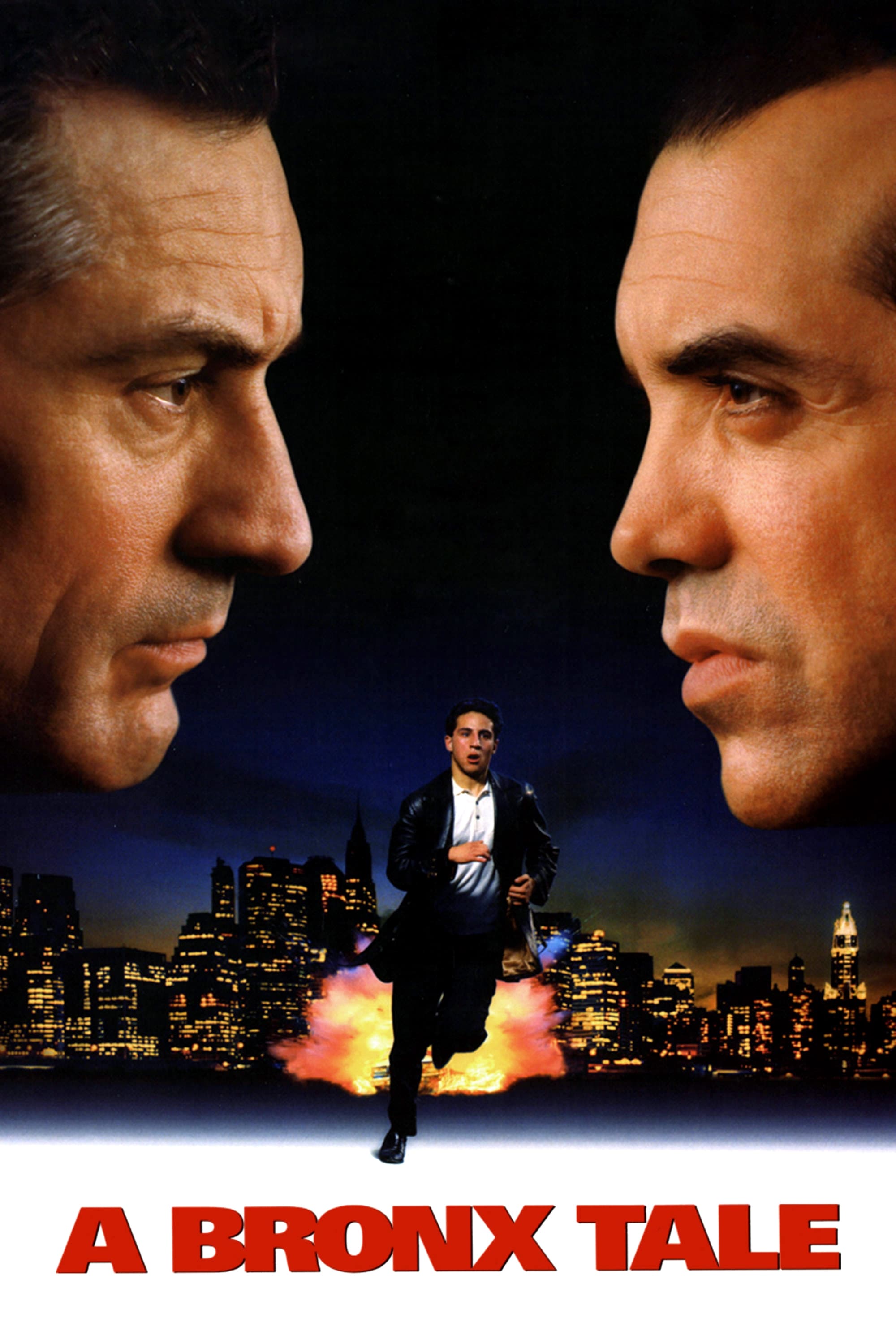
A Bronx Tale poster

A Bronx Tale

121 minutes

Cast

Selected cast credits · Film reference

Robert De Niro Lorenzo
Lillo Brancato Jr. Calogero, age17
Francis Capra Calogero, age9
Clem Caserta Jimmy Whispers
Frank Pietrangolare Danny K.O.
Joe Pesci Carmine
Robert D’Andrea Tony Toupee
Eddie Montanaro Eddie Mush
Fred Fischer Jo Jo the Whale
Dave Salerno Frankie Coffeecake
Louis Vanaria Crazy Mario
Sobe Bailey Willy

A Bronx Tale | The Rewatchables

Explore episodeClose episode

The Stephen A. Smith Hottest Take Award

Sonny’s influence on The Sopranos; take the bus money; Sonny as better father

In the discussion (6)
Approx. transcript time · 00:24:05Read transcript
  • A Bronx Tale is proposed as the strongest cinematic influence on The Sopranos, particularly Sonny’s neighborhood presence and paternal authority.
  • The comparison is qualified: Tony’s brutal behavior corrupts an ideal he admires, whereas the film filters Sonny through C’s view.
  • Tony is argued to begin with Sonny-like obligations before power corrupts him; Sonny’s killing and treatment of Lorenzo complicate his charm.
  • Sonny’s acceptance of the interracial romance contrasts with Lorenzo’s racism and restrictive working-life advice, making the criminal mentor more seductive.
  • Lorenzo should have accepted the lucrative numbers-running offer.
  • Lorenzo is criticized as a bad father for romanticizing exploited working life; Sonny is preferred as a mentor and an affair with the mother is joked about.

What’s Aged the Best?

De Niro’s vulnerability; marriage; thunderbolt romance; Capra; refusing mob money; music; stickball; baseball; narration; cast; mob dialogue; interracial romance; persistent social codes

In the discussion (10)
Approx. transcript time · 00:35:10Read transcript
  • De Niro’s varied early-1990 s work is praised, especially Lorenzo’s unusually vulnerable ordinary-man presence.
  • Lorenzo’s marriage is unusually functional for a De Niro character.
  • The sudden romantic thunderbolt is linked with The Godfather and Goodfellas.
  • Young C’s hair and Francis Capra’s performance are praised, with his Veronica Mars work recalled.
  • Good guys refusing mob offers of $150 a week to drop off numbers are admired.
  • The Sinatra and doo-wop soundtrack and stickball montage are praised.
  • Baseball nostalgia and the scale of historic records before today’s crowded sports landscape are appreciated.
  • The narration works, Zero is a good nickname, Hicks is compelling and the young cast is strong.
  • Mobsters telling people to get out remain reliably funny.
  • The interracial relationship is contrasted with more common modern depictions; racism and anti-snitching codes remain recognizable.

Most Rewatchable Scene

Biker-bar fight; Lorenzo confronts Sonny; craps game

In the discussion (14)
Approx. transcript time · 00:36:21Read transcript
  • Lorenzo apologizing after striking C and then holding him is especially heartbreaking.
  • The bar introductions divide opinion: Eddie Mush, Tony Toupee, Jojo the Whale, Frankie Coffee Cake, Jimmy Whispers, Danny K.O. and Bobby Bars supply amusing nicknames and jokes, but the sequence is criticized as copying Goodfellas without equally important characters.
  • The police lineup and doing a good thing for a bad man are nominated.
  • The craps sequence introduces the Mantle advice and Mush’s bad luck.
  • The elaborate craps scene is compared with Hard Eight as a possible best film depiction.
  • The neighborhood favors and returning$600 echo Goodfellas, but the earlier stage play and shared lived experience complicate accusations of copying.
  • Lorenzo’s working-man-is-the-tough-guy speech is praised.
  • The racetrack’s we’ve-been-mushed moment is nominated and linked with later gambling slang.
  • The twenty-dollar advice, loved-or-feared conversation, biker fight, door test, rescue from the car, shooting and funeral are nominated.
  • Two choices favor Now Youse Can’t Leave; the Lorenzo–Sonny confrontation receives two supportive choices, one after a biker-scene preference.
  • The racist friends’ fiery deaths are welcomed as deserved consequences.
  • The craps game is the remaining final favorite.
  • The boxing scene, where C is embarrassed to sit with his father, is a late emotional favorite that evokes regret after a parent’s death.
  • The boxing-scene response is qualified by recognition that loving fathers can also be emotionally unavailable or racist; Lorenzo’s flaws improve the characterization.

The Great Shot Gordo Award for Most Cinematic Shot

Jane on bus; lineup; shooting; Calogero between friends and father

In the discussion (4)
Approx. transcript time · 00:41:47Read transcript
  • The camera repeatedly lingering on Jane on the bus captures C’s attraction.
  • The lineup and mobsters looking directly into the camera are nominated.
  • Sonny’s shooting and the approaching face are nominated.
  • Jane on the bus is reiterated, and young C caught between his friends and his father at the window is another choice.

The Coach Finstock Award for Best Life Lesson

Wasted talent; focus on yourself and loved ones

In the discussion (16)
Approx. transcript time · 00:44:44Read transcript
  • Being feared rather than loved can sustain a boss’s power but breeds distrust and isolation, exposed when Sonny suspects C.
  • Trouble should be removed early before it spreads like cancer.
  • Nobody cares is interpreted as prioritizing oneself, family and the people actually present in one’s life.
  • The casual behavior at Sonny’s funeral is read as a consequence of choosing fear over love.
  • The claim that fear lasts longer than love is explicitly disputed.
  • The neighborhood’s claim that a rat is the lowest person is challenged by a worse-offender comparison.
  • Doing necessary things even when wrong is considered dependent on the situation.
  • The door test is loved as movie advice but challenged by failed personal experience, nervous dates and modern automatic locks.
  • Mario’s sexual trust test is rejected as foolish and cruel.
  • Losing twenty dollars to avoid an unreliable borrower is considered especially true.
  • The three-great-women theory is admired as dialogue but treated as unverifiable and internally inconsistent.
  • The Mickey Mantle lesson challenges investing emotionally in sports stars who do not know or support the fan.
  • The three stated prison activities—lifting weights, playing cards and getting in trouble—are undercut by Sonny choosing a fourth, reading.
  • Sexual impulse overruling judgment is another stated lesson.
  • Weekly confession is jokingly framed as a reset; nobody cares and focus on yourself is the preferred overall lesson.
  • The final formal choice is that the saddest thing in life is wasted talent.

What’s Aged the Worst?

Door locks; racism; Brancato; final run; musical; crude comments; violence

In the discussion (6)
Approx. transcript time · 01:20:05Read transcript
  • The door test is obsolete with modern locks, alongside the depicted racism.
  • C’s long final jogging sequence is criticized; he is somehow not sweaty afterward.
  • Brancato himself is named as having aged badly.
  • The later musical adaptation is disliked as an idea, though its details are uncertain.
  • The Mario test and crude comments about women are criticized.
  • Racial arson and public shootings are criticized, with modern cellphone visibility noted.

Apex Mountain

Lillo Brancato; Chez Bippy; Italian social clubs

In the discussion (6)
Approx. transcript time · 01:29:46Read transcript
  • De Niro and Pesci are rejected; Brancato is accepted, while Palminteri’s peak is disputed between this passion project, The Usual Suspects and the following Bullets over Broadway nomination.
  • Chez Bippy and Italian social clubs are accepted.
  • Craps scenes are disputed in favor of Casino; father-son films are in the conversation but not the peak.
  • Narducci’s peak is assigned to The Sopranos and Italian films are rejected.
  • Racists burning alive is proposed but Django Unchained’s ending is preferred.
  • Movie bus drivers are disputed between this film and Speed.

Sequel, Prequel, Limited Series, or All-Black Remake

Black-cast version: Ali, Brown, Moore and Ortega

In the discussion (3)
Approx. transcript time · 01:37:44Read transcript
  • A Black-cast version is proposed with Mahershala Ali as Lorenzo, Sterling K.Brown as Sonny, Shameik Moore as C and Jenna Ortega as Jane, with discussion of how the racial conflict must change.
  • The remake could retain the Bronx or move to Detroit and is considered a serious possibility.
  • The remake could make Lorenzo a single father, or cast Laura Linney or Laura Dern as his wife.

Is This Movie Better With…?

Frank Vincent; Wayne Jenkins as the fruit seller

In the discussion (2)
Approx. transcript time · 01:39:22Read transcript
  • Frank Vincent is explicitly added to the recurring casting-addition roster for Italian movies; Wayne Jenkins is proposed as the fruit seller.
  • The Wayne Jenkins fruit-cart impression is developed into a joke about fresh produce and a horse-drawn cart.

Just One Oscar

Chazz Palminteri, supporting actor

In the discussion (1)
Approx. transcript time · 01:40:39Read transcript
  • Palminteri’s supporting performance receives the selections, with De Niro praised and screenplay considered too sparse.