
‹ All movies
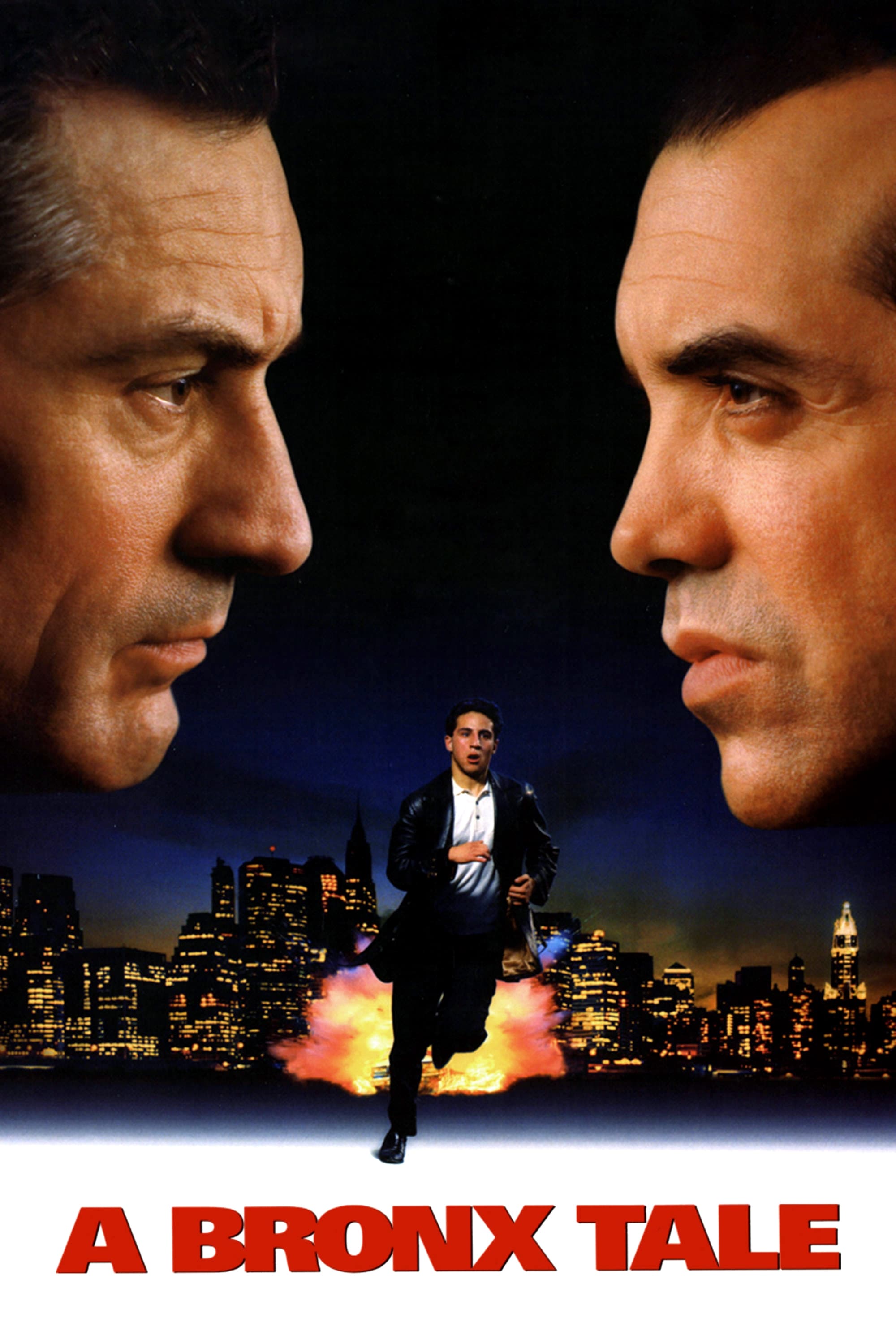
A Bronx Tale poster

A Bronx Tale

121 minutes

Cast

Selected cast credits · Film reference

Robert De Niro Lorenzo
Lillo Brancato Jr. Calogero, age17
Francis Capra Calogero, age9
Clem Caserta Jimmy Whispers
Frank Pietrangolare Danny K.O.
Joe Pesci Carmine
Robert D’Andrea Tony Toupee
Eddie Montanaro Eddie Mush
Fred Fischer Jo Jo the Whale
Dave Salerno Frankie Coffeecake
Louis Vanaria Crazy Mario
Sobe Bailey Willy

A Bronx Tale | The Rewatchables

Explore episodeClose episode

The Stephen A. Smith Hottest Take Award

Sonny’s influence on The Sopranos; take the bus money; Sonny as better father

In the discussion (6)
Approx. transcript time · 00:24:05Read transcript
  • A Bronx Tale is proposed as the strongest cinematic influence on The Sopranos, particularly Sonny’s neighborhood presence and paternal authority.
  • The comparison is qualified: Tony’s brutal behavior corrupts an ideal he admires, whereas the film filters Sonny through C’s view.
  • Tony is argued to begin with Sonny-like obligations before power corrupts him; Sonny’s killing and treatment of Lorenzo complicate his charm.
  • Sonny’s acceptance of the interracial romance contrasts with Lorenzo’s racism and restrictive working-life advice, making the criminal mentor more seductive.
  • Lorenzo should have accepted the lucrative numbers-running offer.
  • Lorenzo is criticized as a bad father for romanticizing exploited working life; Sonny is preferred as a mentor and an affair with the mother is joked about.

Half-Assed Internet Research

Palminteri’s deal; budget; composite Sonny; childhood killing; casting Eddie Mush

In the discussion (5)
Approx. transcript time · 00:33:06Read transcript
  • Palminteri reportedly held out for the right to play Sonny in adapting his one-man show; De Niro’s enthusiasm and commitment secured the deal.
  • The stated budget is$10 million and gross$17.3 million; De Niro’s Tribeca production involvement is emphasized.
  • Sonny reportedly combines two real people, while Palminteri witnessed a childhood killing and had a bus-driver father named Lorenzo.
  • The real Eddie Mush was reportedly cast after a search, and rain halted filming on his first day.
  • A supposed Schneider biker cameo is denied; De Niro reportedly obtained a bus license but was not permitted to drive for filming.

What’s Aged the Best?

De Niro’s vulnerability; marriage; thunderbolt romance; Capra; refusing mob money; music; stickball; baseball; narration; cast; mob dialogue; interracial romance; persistent social codes

In the discussion (10)
Approx. transcript time · 00:35:10Read transcript
  • De Niro’s varied early-1990 s work is praised, especially Lorenzo’s unusually vulnerable ordinary-man presence.
  • Lorenzo’s marriage is unusually functional for a De Niro character.
  • The sudden romantic thunderbolt is linked with The Godfather and Goodfellas.
  • Young C’s hair and Francis Capra’s performance are praised, with his Veronica Mars work recalled.
  • Good guys refusing mob offers of $150 a week to drop off numbers are admired.
  • The Sinatra and doo-wop soundtrack and stickball montage are praised.
  • Baseball nostalgia and the scale of historic records before today’s crowded sports landscape are appreciated.
  • The narration works, Zero is a good nickname, Hicks is compelling and the young cast is strong.
  • Mobsters telling people to get out remain reliably funny.
  • The interracial relationship is contrasted with more common modern depictions; racism and anti-snitching codes remain recognizable.

Most Rewatchable Scene

Biker-bar fight; Lorenzo confronts Sonny; craps game

In the discussion (14)
Approx. transcript time · 00:36:21Read transcript
  • Lorenzo apologizing after striking C and then holding him is especially heartbreaking.
  • The bar introductions divide opinion: Eddie Mush, Tony Toupee, Jojo the Whale, Frankie Coffee Cake, Jimmy Whispers, Danny K.O. and Bobby Bars supply amusing nicknames and jokes, but the sequence is criticized as copying Goodfellas without equally important characters.
  • The police lineup and doing a good thing for a bad man are nominated.
  • The craps sequence introduces the Mantle advice and Mush’s bad luck.
  • The elaborate craps scene is compared with Hard Eight as a possible best film depiction.
  • The neighborhood favors and returning$600 echo Goodfellas, but the earlier stage play and shared lived experience complicate accusations of copying.
  • Lorenzo’s working-man-is-the-tough-guy speech is praised.
  • The racetrack’s we’ve-been-mushed moment is nominated and linked with later gambling slang.
  • The twenty-dollar advice, loved-or-feared conversation, biker fight, door test, rescue from the car, shooting and funeral are nominated.
  • Two choices favor Now Youse Can’t Leave; the Lorenzo–Sonny confrontation receives two supportive choices, one after a biker-scene preference.
  • The racist friends’ fiery deaths are welcomed as deserved consequences.
  • The craps game is the remaining final favorite.
  • The boxing scene, where C is embarrassed to sit with his father, is a late emotional favorite that evokes regret after a parent’s death.
  • The boxing-scene response is qualified by recognition that loving fathers can also be emotionally unavailable or racist; Lorenzo’s flaws improve the characterization.

Roger Ebert's review

In the discussion (1)
Approx. transcript time · 00:40:20Read transcript
  • Ebert’s four-star response praises the humor, emotion, characters and De Niro’s tonal control.

Picking Nits

Unaddressed slur; biker-fight logistics; police response; Mush joke; absent mother and sibling; Goodfellas imitation

In the discussion (8)
Approx. transcript time · 00:40:58Read transcript
  • C’s racial slur is followed by no adequate apology before the romance resumes.
  • The out-of-shape mobsters’ overwhelming victory over bikers is disputed, with weapons, fear and practiced violence offered as defenses.
  • Sonny leaves several bikers behind him while awaiting his men, creating an obvious tactical vulnerability.
  • C contributes little to the biker fight.
  • Police reach C’s home implausibly quickly and rely on a nine-year-old despite many other witnesses.
  • Killing Mush to end his bad luck is jokingly proposed, with his payments and the impracticality of a track shooting as objections.
  • A mentioned baby and the mother vanish from the later story, prompting speculation about a sister and a separation.
  • The Goodfellas-like music, storytelling and Pesci casting raise questions about homage versus excessive imitation.

The Great Shot Gordo Award for Most Cinematic Shot

Jane on bus; lineup; shooting; Calogero between friends and father

In the discussion (4)
Approx. transcript time · 00:41:47Read transcript
  • The camera repeatedly lingering on Jane on the bus captures C’s attraction.
  • The lineup and mobsters looking directly into the camera are nominated.
  • Sonny’s shooting and the approaching face are nominated.
  • Jane on the bus is reiterated, and young C caught between his friends and his father at the window is another choice.

The Coach Finstock Award for Best Life Lesson

Wasted talent; focus on yourself and loved ones

In the discussion (16)
Approx. transcript time · 00:44:44Read transcript
  • Being feared rather than loved can sustain a boss’s power but breeds distrust and isolation, exposed when Sonny suspects C.
  • Trouble should be removed early before it spreads like cancer.
  • Nobody cares is interpreted as prioritizing oneself, family and the people actually present in one’s life.
  • The casual behavior at Sonny’s funeral is read as a consequence of choosing fear over love.
  • The claim that fear lasts longer than love is explicitly disputed.
  • The neighborhood’s claim that a rat is the lowest person is challenged by a worse-offender comparison.
  • Doing necessary things even when wrong is considered dependent on the situation.
  • The door test is loved as movie advice but challenged by failed personal experience, nervous dates and modern automatic locks.
  • Mario’s sexual trust test is rejected as foolish and cruel.
  • Losing twenty dollars to avoid an unreliable borrower is considered especially true.
  • The three-great-women theory is admired as dialogue but treated as unverifiable and internally inconsistent.
  • The Mickey Mantle lesson challenges investing emotionally in sports stars who do not know or support the fan.
  • The three stated prison activities—lifting weights, playing cards and getting in trouble—are undercut by Sonny choosing a fourth, reading.
  • Sexual impulse overruling judgment is another stated lesson.
  • Weekly confession is jokingly framed as a reset; nobody cares and focus on yourself is the preferred overall lesson.
  • The final formal choice is that the saddest thing in life is wasted talent.

What’s Aged the Worst?

Door locks; racism; Brancato; final run; musical; crude comments; violence

In the discussion (6)
Approx. transcript time · 01:20:05Read transcript
  • The door test is obsolete with modern locks, alongside the depicted racism.
  • C’s long final jogging sequence is criticized; he is somehow not sweaty afterward.
  • Brancato himself is named as having aged badly.
  • The later musical adaptation is disliked as an idea, though its details are uncertain.
  • The Mario test and crude comments about women are criticized.
  • Racial arson and public shootings are criticized, with modern cellphone visibility noted.

Casting What-Ifs

Narducci’s audition; unfilmed Frank Vincent scene; killer’s audition

In the discussion (3)
Approx. transcript time · 01:24:18Read transcript
  • Narducci reportedly arrived with her son at the open casting call and was discovered herself.
  • Frank Vincent’s planned mafia-boss scene was never filmed.
  • The actor playing Sonny’s killer reportedly lost the older-C audition to Brancato.

Recasting Couch

Stronger friend group; Adrian Grenier

In the discussion (1)
Approx. transcript time · 01:27:37Read transcript
  • A stronger, now-recognizable actor in C’s friend group is desired, with Adrian Grenier suggested; the one-note roles may be the problem.

Apex Mountain

Lillo Brancato; Chez Bippy; Italian social clubs

In the discussion (6)
Approx. transcript time · 01:29:46Read transcript
  • De Niro and Pesci are rejected; Brancato is accepted, while Palminteri’s peak is disputed between this passion project, The Usual Suspects and the following Bullets over Broadway nomination.
  • Chez Bippy and Italian social clubs are accepted.
  • Craps scenes are disputed in favor of Casino; father-son films are in the conversation but not the peak.
  • Narducci’s peak is assigned to The Sopranos and Italian films are rejected.
  • Racists burning alive is proposed but Django Unchained’s ending is preferred.
  • Movie bus drivers are disputed between this film and Speed.

Sequel, Prequel, Limited Series, or All-Black Remake

Black-cast version: Ali, Brown, Moore and Ortega

In the discussion (3)
Approx. transcript time · 01:37:44Read transcript
  • A Black-cast version is proposed with Mahershala Ali as Lorenzo, Sterling K.Brown as Sonny, Shameik Moore as C and Jenna Ortega as Jane, with discussion of how the racial conflict must change.
  • The remake could retain the Bronx or move to Detroit and is considered a serious possibility.
  • The remake could make Lorenzo a single father, or cast Laura Linney or Laura Dern as his wife.

Is This Movie Better With…?

Frank Vincent; Wayne Jenkins as the fruit seller

In the discussion (2)
Approx. transcript time · 01:39:22Read transcript
  • Frank Vincent is explicitly added to the recurring casting-addition roster for Italian movies; Wayne Jenkins is proposed as the fruit seller.
  • The Wayne Jenkins fruit-cart impression is developed into a joke about fresh produce and a horse-drawn cart.

Just One Oscar

Chazz Palminteri, supporting actor

In the discussion (1)
Approx. transcript time · 01:40:39Read transcript
  • Palminteri’s supporting performance receives the selections, with De Niro praised and screenplay considered too sparse.

Probably Unanswerable Questions

De Niro marriages; car-bomb culprit; Scorsese version; Bronx bikers

In the discussion (4)
Approx. transcript time · 01:42:02Read transcript
  • De Niro’s unusually normal screen marriage is compared with Stanley & Iris and Heat.
  • The car-bomb planter remains unresolved among the bikers, Sonny’s eventual killer and a rival crew.
  • A hypothetical Scorsese-directed version with De Niro as Sonny is expected to be more cinematic and thrilling, though the existing film’s straightforward ease is also valued.
  • The bikers’ reason for visiting and attacking a Bronx bar is questioned.

Producer review

Theatrical style; competing parental advice

In the discussion (1)
Approx. transcript time · 01:48:12Read transcript
  • The film feels whimsical and theatrical, while effectively showing how a young person chooses which parental advice to retain.

More from the conversation

An eight-film father-son roster includes A Bronx Tale, Kramer vs.Kramer, He Got Game, Field of Dreams, Catch Me If You Can, The Godfather, The Lion King and Boyz n the Hood; He Got Game is a favorite and Catch Me If You Can’s fit is disputed.
Approx. transcript time · 00:02:57Read transcript
The discussion distinguishes biological fathers from surrogate mentors, adding Parenthood, Boyhood, At Close Range, Last Crusade and The Champ as examples.
Approx. transcript time · 00:04:28Read transcript
Having a father and a very different stepfather provides a personal parallel to the film’s competing advice.
Approx. transcript time · 00:06:34Read transcript
Cooler surrogate mentors are contrasted with a parent’s responsibility, followed by a memory of a father fiercely resisting outside influences and disliking C’s treatment of Lorenzo.
Approx. transcript time · 00:07:30Read transcript
Family roots in New York and the search for admired mentors make the moral conflict personal; the poster’s two heads capture C’s divided loyalties.
Approx. transcript time · 00:08:55Read transcript
The two ages of C illustrate impressionability, including Sonny quickly undermining his Yankees devotion.
Approx. transcript time · 00:10:19Read transcript
A child choosing the wider world over a father is described as painful but familiar, with sports and television examples.
Approx. transcript time · 00:11:12Read transcript
Teenage enthusiasm for MTV’s The Grind prompts teasing and memories.
Approx. transcript time · 00:12:03Read transcript
The immigrant-family ideal of honest sacrifice collides with a younger generation seeking more than a secure working life.
Approx. transcript time · 00:13:09Read transcript
The film’s racism, first love and disastrous choices are intertwined; C’s friends are recognized as violent racial terrorists rather than harmless delinquents.
Approx. transcript time · 00:14:39Read transcript
A few neighborhood blocks feel like a whole world to a child, supported by family memories of Astoria and C’s unfamiliarity with East New York.
Approx. transcript time · 00:16:55Read transcript
The 1960 sare compared with national adolescence, with personal memories of Boston busing illustrating resistance to changing social boundaries.
Approx. transcript time · 00:18:04Read transcript
An informal Italian-cultural canon includes The Godfather I and II, Goodfellas, A Bronx Tale, The Sopranos, a qualified My Cousin Vinny, and Sinatra’s Main Event.
Approx. transcript time · 00:19:10Read transcript
The mafia’s cinematic prominence is related to its declining real-world power; Sonny is compared with Vito rather than Sonny Corleone.
Approx. transcript time · 00:20:39Read transcript
Saturday Night Fever is added to the Italian-film canon, while Goodfellas and The Sopranos are discussed as exposing the violence behind an idealized neighborhood code.
Approx. transcript time · 00:21:57Read transcript
Limited knowledge of Sonny’s private life and the parking-space killing preserves C’s point of view.
Approx. transcript time · 00:26:14Read transcript
Pesci’s final appearance is compared with a surprise audience-applause cameo.
Approx. transcript time · 00:26:32Read transcript
Brancato’s later criminal troubles and the Wasted Talent documentary are discussed as a painful echo of the film’s lesson, with comparisons to other promising young stars.
Approx. transcript time · 00:29:55Read transcript
His discovery, warnings from the older actors and brief Sopranos role are recalled as evidence of lost opportunity.
Approx. transcript time · 00:32:19Read transcript
The continuing one-man stage performances are admired for portraying every character.
Approx. transcript time · 00:33:43Read transcript
The film launched Palminteri into prominent Hollywood roles, including The Usual Suspects and acting opposite Cher.
Approx. transcript time · 00:34:32Read transcript
De Niro’s business expansion and reluctance to intellectualize acting in interviews are contrasted with later political outspokenness.
Approx. transcript time · 00:37:23Read transcript
Disappointing reception is attributed partly to expectations of a mob film rather than a family coming-of-age story, amid a crowded 1993 release year.
Approx. transcript time · 00:39:05Read transcript
Its inclusion in an AFI gangster-film list is questioned because it is not primarily experienced as a mafia movie.
Approx. transcript time · 00:39:46Read transcript
The limited directing career is attributed to the workload and better financial returns from acting.
Approx. transcript time · 00:40:38Read transcript
Sanders, Clemens and Damon changing teams supply personal examples of learning that sports loyalty is not reciprocal.
Approx. transcript time · 00:55:39Read transcript
Craps and blackjack are compared through personal gambling preferences and the behavior tables reveal.
Approx. transcript time · 01:00:03Read transcript
Hypothetical gambling-movie and prison-movie channels inspire programming examples including The Color of Money, Shot Caller, Oz, Escape from Alcatraz, Shawshank and Face/Off.
Approx. transcript time · 01:06:16Read transcript
The narrow rotation and flexible interpretation of Black-film programming on Starz are recalled.
Approx. transcript time · 01:07:36Read transcript
College stickball games and a painful comic mishap are recalled.
Approx. transcript time · 01:12:08Read transcript
A family’s split Yankees/Mets loyalties lead to regret about inheriting Mets fandom.
Approx. transcript time · 01:13:36Read transcript
Hicks’s later life and Belly role are discussed as explanations for her limited screen career.
Approx. transcript time · 01:15:12Read transcript
Narducci’s later Sopranos role and its marital tensions are recalled.
Approx. transcript time · 01:24:47Read transcript
The Irishman’s quality and John Wick 4’s wardrobe prompt a viewing digression.
Approx. transcript time · 01:27:05Read transcript
Palminteri’s birth name prompts a playful most-successful-Chazz comparison.
Approx. transcript time · 01:28:17Read transcript
Potential live episodes, Speed 2 and earlier unpopular selections become a digression.
Approx. transcript time · 01:32:01Read transcript
Parenthood changes the interpretation of repetitive safety advice, risk aversion and childhood discipline; personal memories illustrate the tension.
Approx. transcript time · 01:49:32Read transcript
Memories of strict warnings against theft and drunk driving lead to distinctions between fearing a father physically, respecting boundaries and fearing guilt trips.
Approx. transcript time · 01:51:58Read transcript
The film’s ability to prompt personal reflection outweighs reservations about length and direction.
Approx. transcript time · 01:53:59Read transcript
An informal family system classifying action films by suitable showtime is compared with choosing a dine-in theater versus a larger screen.
Approx. transcript time · 01:56:19Read transcript
A Boston Alamo Drafthouse opening prompts rowdy-audience jokes, followed by a future birthday-episode promotion.
Approx. transcript time · 01:57:19Read transcript